By Elle Adams.
A former NFL running back and cannabis advocate is warning that if Bay Staters vote to eliminate retail sales of recreational marijuana via Question 8, it “could set a really dangerous precedent.”
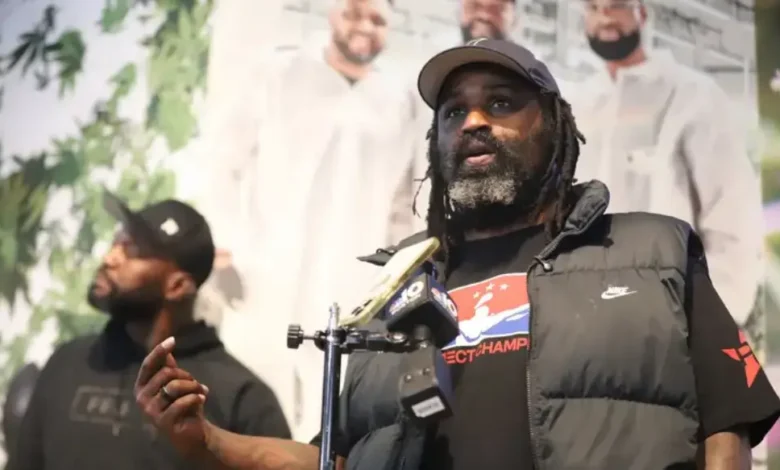
From a dispensary in downtown Boston, Ricky Williams urged voters Monday morning to vote “no” on the measure, reflecting on how he uses cannabis to help with social anxiety and how other athletes use it to cope. As campaigns near the two-week countdown to Election Day, supporters of the measure maintain that recreational cannabis is harming public and mental health.
“In my football career, I was known for failing drug tests for cannabis. And my experience is, cannabis really helped me deal with the mental, and emotional, and physical stress of being a professional athlete,” Williams told reporters. “Our teams ask us to go out there and put our bodies on the line, and I think we should have all reasonable means to be able to take care of ourselves, and that’s why cannabis has been so important for me.”
Williams is co-founder of a group called Project Champion, a bipartisan organization of former professional athletes who advocate for legal, regulated cannabis markets. Williams entered the NFL with the New Orleans Saints before playing the majority of his career with the Miami Dolphins and capping it off with the Baltimore Ravens.
“There’s been so much progress we’ve all been fighting for for decades, and I think this is important with a battleground, you know, market for cannabis,” Williams said of his choice to advocate in Massachusetts. “I think it’s really the first time on a big scale that the laws that have been passed for recreational cannabis are being challenged or questioned. And I think it’s an opportunity for Mass. to say that, ‘This is good for us, and we really like it.’ And I think that sends a message across the whole country.”
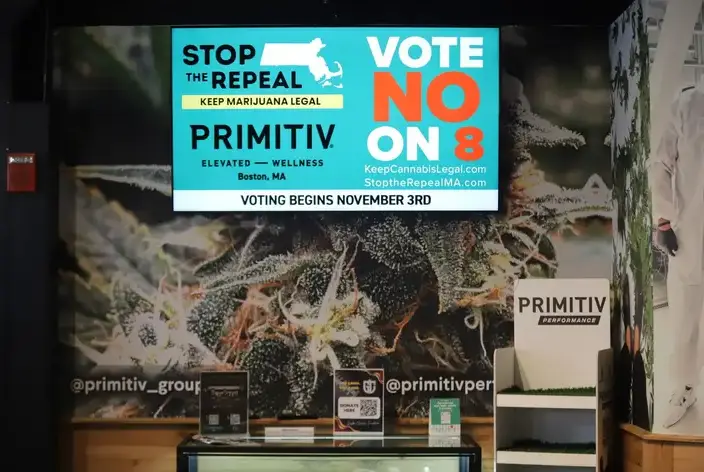
A campaign sign to oppose Question 8, a measure that would repeal the legalization for retail sales of recreational marijuana, is set up at a downtown Boston dispensary called Primitiv on Oct. 19, 2026. Elle Adams State House News photo.
A UMass Amherst poll released Monday showed that 61% of respondents would probably or definitely vote “no” on Question 8, making no change to state law. The poll found 31% would probably or definitely vote “yes” to eliminate the retail cannabis industry, 5% are undecided, and 3% don’t understand the measure.
Pat Nestor, spokesman for the campaign supporting a “yes” vote on Question 8, said the Coalition for a Healthy Massachusetts is feeling momentum especially on social media as it continues to phone bank, knock on doors and post online.

“The response when people are knocking on doors — I think people have been privately worried about the state of the marijuana industry for a while now,” Nestor said. “They’re seeing the pot smoke everywhere, they’re looking at a pot store on every corner.”
Nestor pointed to health issues he said are associated with high potency cannabis products in the existing market. The campaign also contends that DUIs are rising due to driver consumption, and ties consumption to a “mental health crisis.”
Question 8 would still allow for the personal possession of recreational marijuana and keep medical marijuana legal. Existing retail marijuana stores could either apply to become medical dispensaries or sell their inventory to one, and the Cannabis Control Commission would remain, but only to regulate the medical sector.
“We’re getting signs out the door. We have a big media campaign moving into the last two weeks,” Nestor said. “Every day that goes by I think we’re feeling more and more positive.”
Ballot question opponents argue that repealing recreational marijuana sales could push consumers into the illicit market, and Williams added that cannabis is often a better option for injured and struggling athletes than medication like opioids.
“The biggest health concern, I think, is prohibition,” Williams said, standing next to Primitiv co-owner and former NFL offensive tackle Gosder Cherilus and Massachusetts Cannabis Coalition Executive Director Ryan Dominguez. “It creates a dark age where we can’t do the research, we can’t ask the questions. There’s no doubt that there’s dangers with anything. But prohibition has never worked. I think if we can keep our minds open and keep having conversations about it, I think that’s how we’re going to be able to have the best outcomes for everyone involved.”
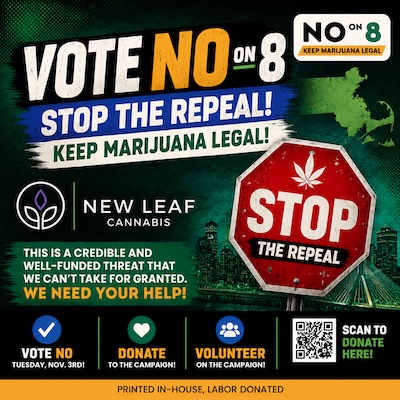
The “Stop the Repeal” campaign says that a “no” vote protects state and municipal revenue, jobs and small businesses, public safety and public health. Nestor said the amount of money the marijuana industry makes for the state “can and will be replaced” should the question pass. He also said that there are tens of thousands of cannabis-related emergency room visits annually in Massachusetts, contributing to high healthcare costs and ER waits.
“Obviously, [I’m] not a football player. But their stories have actually impacted how I think about this, and seeing the impact it has on our young people. The fact that their lives are back in their hands and in their control, and they’re able to access well-crafted, well-preserved, well-stored, well-researched product, so that they’re not harmed, is very important,” Primitiv part-owner and former Boston Rep. Marie St. Fleur said. “We should run scared on this. I don’t assume a win. I mean, if you ever run for office, you don’t assume a win.”