
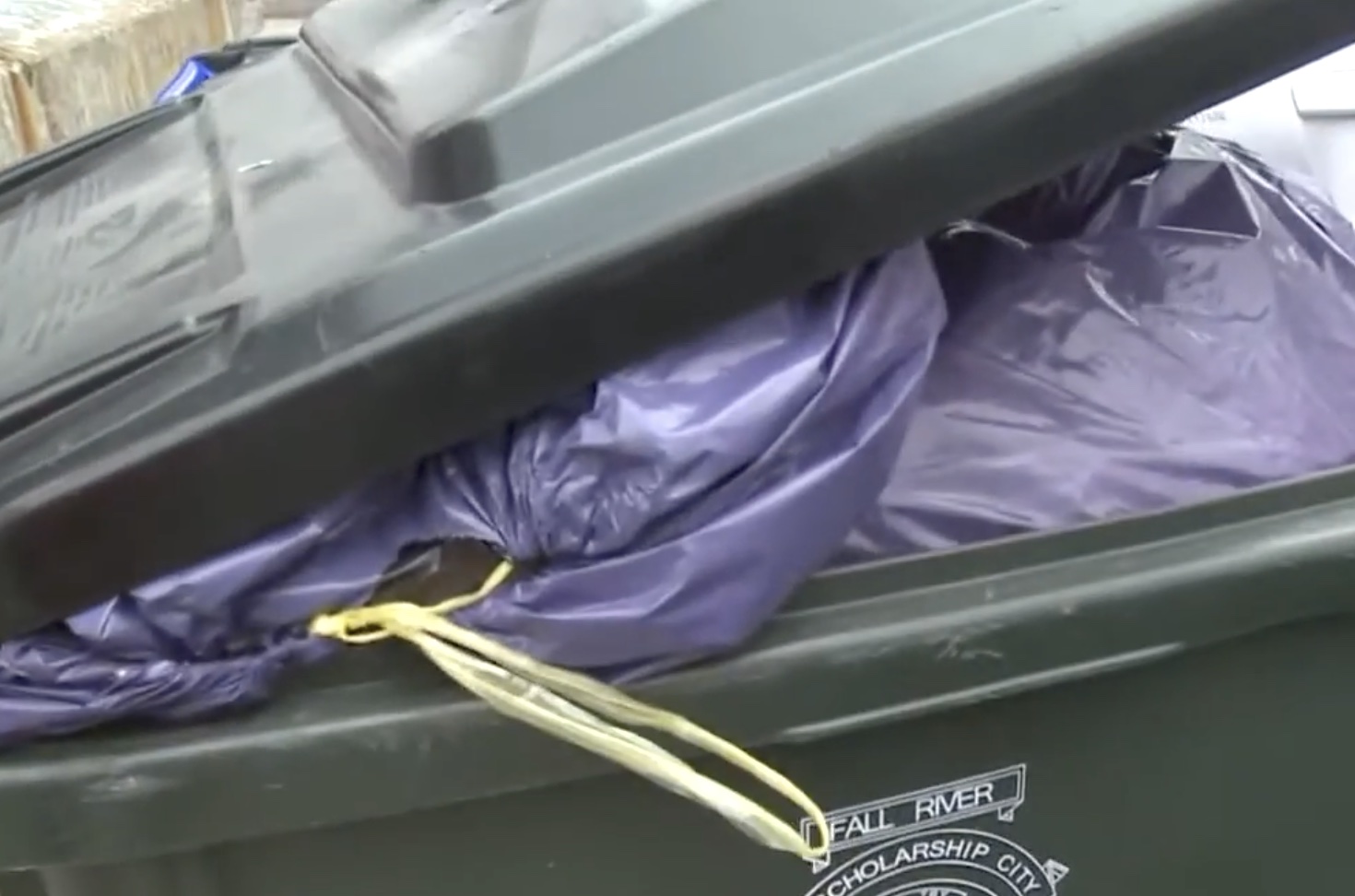
Yes, the purple bags were the final straw that broke Will Flanagan’s political back – not because it was a bad idea, but because the lack of messaging and proper implementation.
Politics in Fall River has become a blood sport the past decade where two mayors got recalled, police chiefs don’t make it past two years and you can lose a foot dipping your toe into the political waters. In Fall River, political ideas succeed or fail almost immediately based on how well mayors get their message out and when it came to the pay-as-you-throw (PAYT) purple bags, the message received was “I’m increasing your taxes” – a message that often gets the pitchforks sharpened and touches dipped in fuel. The truth was, yes residents saw a new fee, but if the program was ran properly, residents would save money in the long run.
Since Will Flanagan (introduced the purple bags) and Jasiel Correia (tried to enforce it but got rid of the purple bags) were recalled, trash and recycling has cost taxpayers a fortune. Just watch the topic come up at any city council meeting and you’ll learn just how bad it is. Contracts have become meaningless and costs always spike.
Here are 8 reasons Fall River should bring back the purple bags.
1. It’s equitable. Why should a person who throws away 1 pound of trash pay the same as a family throwing away 20 pounds of trash? In Swansea, my wife and I throw away one bag of trash every 2 weeks. Our neighbor with a large family throws away multiple bags a week. How would it make sense that we pay the same fee/tax? Instead, we pay about $7 a month and my neighbor pays $14-$28.
2. It’s affordable. In Swansea, the pay-as-you-throw trash bags cost $3.50 each for 33-gallon bags and $2.00 each for 15-gallon bags. We use about two 33-gallon bags per month so our monthly trash bill is about $7 a month or $84 a year. In Fall River, the average person likely pays hundreds of dollars a year for trash through their taxes or rent – when the purple bags were around it was $2 a week.
3. It increases recycling. I’d estimate we recycle 3 times as much as we dispose of trash. People paying per bag of trash, are more likely to recycle when it’s no cost to them. The financial incentive leads to much higher diversion—Massachusetts communities with PAYT average 44% recycling rates vs. 31% without, with some seeing jumps from single digits to over 50%.
4. Cities and towns can make money on some recycling items and the PAYT program. Metals can generate revenue and Fall River’s purple bags generated about $2 million in revenue. As long as the program is managed well and residents follow the rules, it’s a win-win.
5. You pay more for trash and recycling today than with purple bags. Without the purple bags, Fall River pays for the trash and recycling program through property taxes. If you own a property or pay rent in Fall River, you are paying for trash/recycling pick up – directly through property taxes or indirectly through rent. Purple bags were about $2 per week – property owners and renters are paying much more today.
6. Reduces overall waste generation. Households produce significantly less trash (e.g., ~30% less in Massachusetts towns with PAYT vs. those without), as people rethink consumption, reuse items, and minimize packaging. Less trash means reduced tipping fees at landfills/incinerators, transportation expenses, and overall solid waste management budgets.
7. Proven success across thousands of communities. Over 7,000 U.S. municipalities (including many in Massachusetts) use it effectively to meet waste reduction goals, control costs, and improve environmental outcomes.
8. The more you recycle, the fewer resources are needed to be extracted from the earth. A win for the environment.