
By Colin A. Young
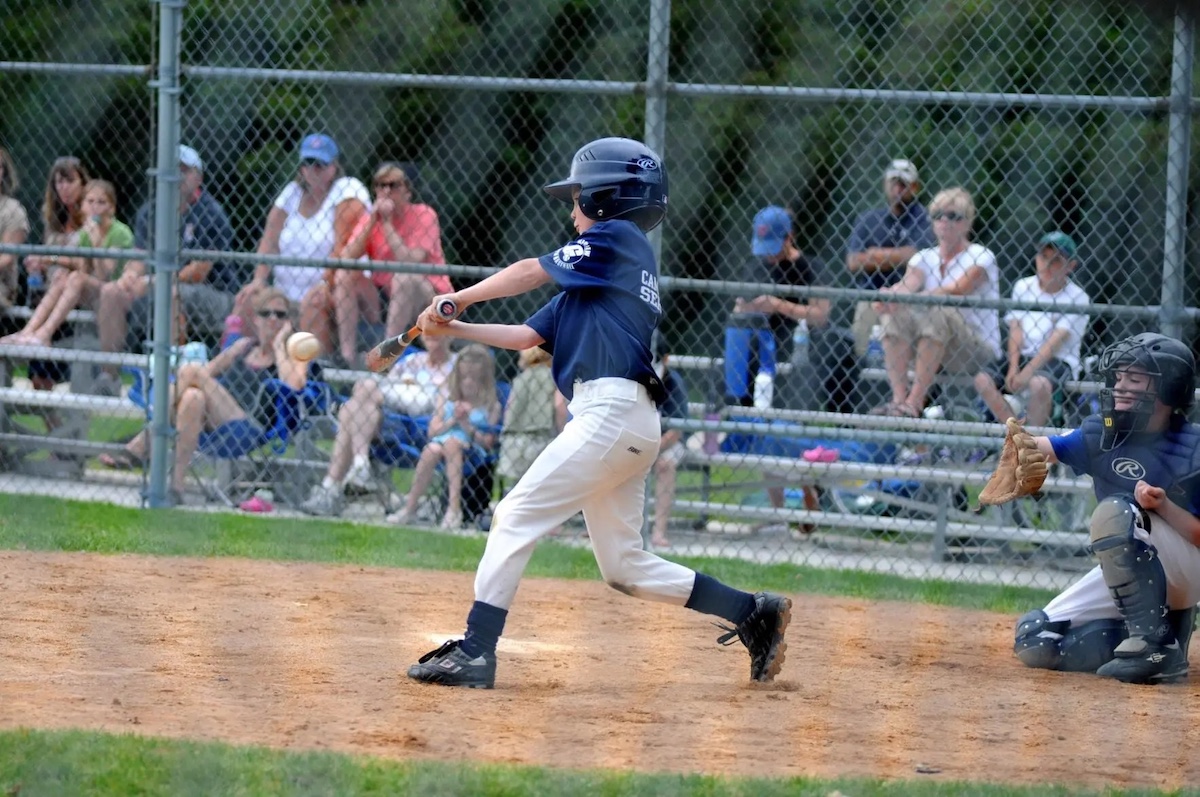
A group created to investigate the health impacts and financial challenges around youth sports has recommended an entirely new framework, one that would charge a youth sports oversight agency with licensing coaches and officials and open the door to state regulation of things like season length and maximum participation hours.
The Special Working Group on Youth Sports, chaired by State Athletic Commission Chairman Josh Zakim, was created in 2024 and this week filed its report with the Legislature detailing how its members envision greater state government oversight, putting “the focus where it belongs: letting kids play and letting them have fun playing the sports they love.”
“Youth sports are at a crossroads. Participation in youth sports is an unequaled opportunity for kids to be healthy, build bonds with peers and learn about leadership and teamwork. There is even evidence that it can protect against mental health issues like depression and anxiety. Increasingly, though, youth sports are also a business. This can make youth sports a source of anxiety for everyone involved,” the working group says in its report. “Parents struggle under increased costs and unreasonable expectations. Players face increased pressure in this atmosphere which can lead to injuries and burnout. Meanwhile, other youths find sports out of reach if their parents cannot afford for them to play.”
The group issued 11 recommendations and provided draft legislation for nine of them. Its primary recommendation, and the one the others all flow from, is the creation of an independent state agency dedicated exclusively to youth sports. The report specifically likens it to the Gaming Commission and says that it would be “the central authority responsible for collecting statewide data, establishing safety standards, coordinating policy, administering regulatory programs, and providing guidance and resources to leagues, coaches, officials, parents, and athletes.”
That new state agency would also be tasked with implementing the working group’s remaining recommendations. That would include a statewide framework for coach and official licensure, training and accountability. Coaches and officials would face mandatory sex offender background checks (adding to criminal background checks already required) under the proposal, and the state could suspend or revoke a license “if the licensee’s continued coaching or officiating poses an immediate and serious threat to the public health, safety or welfare.”
Other recommendations include publishing a statewide model code of conduct establishing baseline expectations for coaches, officials, athletes, parents, and spectators; creating a voluntary statewide registry through which participating organizations could share disciplinary information about parents or spectators whose conduct threatens safety or event integrity; and more. The working group also recommended that the state stiffen the penalties for assault and battery on coaches and officials to a minimum 90 days of incarceration or a minimum fine of $500.
“By centralizing oversight over coaches and officials through licensure, there would be one agency tasked with administering background checks for all youth sports organizations, reducing duplicative work for organizations and the coaches and officials themselves,” the working group wrote. “Statewide oversight will also eliminate the patchwork oversight present in the current system, limiting the ability of a coach or official to be disciplined by one organization and simply begin working for another.”
The health and wellbeing of young athletes is another thrust of the recommendations, including giving the state regulatory authority to establish “reasonable standards for participation hours, season length, practice schedules, and activity timing, with flexibility to account for sport, age, and other relevant factors.” It also suggests expanding health and safety protocols beyond school-sponsored athletics to include private and community-based leagues, covering concussions, heat illness, weather hazards, injury reporting, return-to-play procedures, and emergency preparedness.
Lawmakers held a hearing in 2023 on how the youth sports landscape has dramatically changed with the rise of private club teams — and with it more early specialization, overtraining, injuries and burnout. Sen. Barry Finegold said it was important to look into youth sports issues because they sat at the intersection of healthcare and economics. The Andover Democrat was later appointed as a member of the working group.
“It’s something I hear a lot about from parents,” Finegold said when the Senate introduced the 2024 economic development bill that created the commission. “We see minor injuries in kids up dramatically, especially ACL injuries. So we’re really looking at this. It’s something that I think is very serious, not only financially for parents, but I think about the long-term damage we’re doing to our kids, because so many of these kids are now specializing in sports. And not only is it not good for them, but it is getting incredibly harmful for them.”
The working group’s recommendations include something for parents as well. The group says no youth sports organization or facility in Massachusetts should be able to ban family members from recording youth sports events.
“One of the most immediately felt effects of private equity’s presence in youth sports is efforts to ban recording of youth sport games in order to drive traffic to paid platforms showing those contests,” the group wrote. “Remembering and sharing a child’s game is an overwhelming positive for a family. It can give a child a sense of support and build bonds connecting generations. Denying that in order to force supporters to a for-profit streaming service is not consistent with the values of the Commonwealth.”