STATE HOUSE, BOSTON, July 15, 2026…..Less than a week after signing the new state budget, Gov. Maura Healey filed a supplemental budget Wednesday seeking an additional $100 million for public schools this year.
Her announcement comes amid a tough budget cycle for schools around the state, which have had to make cuts to teachers, staff and services. Many communities have been forced to make difficult decisions between raising their own taxes or cutting school funding.
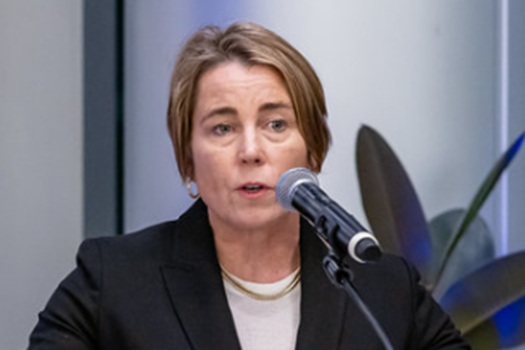
“In this moment, I want our teachers, our educators, our counselors, our schools, to know they have our support. I want our students and towns to know that they have our support as well. We don’t want to see these programs, these services, or these positions cut because of these tough budgets,” Healey said during a press conference at the State House, flanked by education leaders, legislators and local officials.
It also comes as Healey is campaigning for a second term, asking voters to deliver her back to the corner office in November. The strain on municipal budgets has been among the largest challenges this session, and a repeated campaign theme.
“We have seen and heard the challenge we face to ensure that mission-critical programs, services, and resources are sustained and expanded, so students receive the highest quality education that they really deserve,” Education Secretary Stephen Zrike said, noting the “significant fiscal pressure.”
The supplemental budget will be funded with “projected” and “unbudgeted” revenue from the state’s 4% surtax on households that bring in over about $1 million in a year.
The surtax is estimated to generate $2.7 billion in revenue this fiscal year, and collections have far exceeded projections in past years. The revenue source, which is only a few years old, has funded a huge swell of investments into education, including for universal free school meals, free community college, child care grants, and backfilling dollars needed to complete the state’s obligations under the Student Opportunity Act for general K-12 funding.
The governor is proposing the state distribute the $100 million on an enrollment basis to schools. Healey said it amounts to an average increase of $112 per student across all 319 school districts.
The Massachusetts Teachers Association, the largest teachers union in Massachusetts, in a release called the supp “significant,” but said “it will still not be enough to fully counterbalance the challenges facing our communities.”

“Spiraling costs for healthcare and special education and the outdated limitations that Proposition 2½ place on municipalities are forcing cities and towns to make decisions that are not in the best interests of students and families,” the union said.
Amesbury Mayor Kassandra Gove, who is also the president of the Massachusetts Municipal Association, echoed the sentiment.
“As you and your team know, governor, cities and towns in all corners of the commonwealth are facing structural budget challenges that are impossible for us to solve on our own,” she said. “These challenges are a direct result of a big storm: rising costs and a limited ability for cities and towns to generate revenues.”
In the fiscal year 2027 budget that Healey signed earlier this month, she and the Legislature revived the Foundation Budget Review Commission, which will look at the formula that distributes state dollars to schools.
School officials, municipal leaders, teachers and students have been calling on the Legislature and governor to act for years, saying that the formula no longer works in a world of post-COVID inflation. Lawmakers resisted acting until this year. They say the time is right now that the six-year Student Opportunity Act is fully implemented.
Healey said she looks forward to the funding commission’s work but “we can’t wait,” and she’s proposing the supp now ahead of the start of next school year. She called on the Legislature to act on it within the month.
“We know that cities and towns are having to make some real-time decisions now for the fall, and I don’t want to see us go backwards,” she said. “Having worked very hard to get ourselves atop the national rankings for the first time in years in education, I don’t want to see us go backwards.”
Sam Drysdale is a reporter for State House News Service and State Affairs Pro Massachusetts. Reach her at sdrysdale@statehousenews.com.