
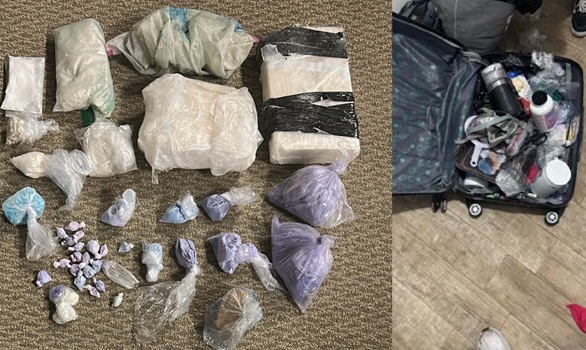
BOSTON – A Massachusetts man has been arrested and charged with possessing multiple kilograms of fentanyl intended for distribution.
According to the Department of Justice, 28-year-old Junior Tejada Hernandez of Worcester whose immigration status is unknown at this time, was charged with one count of possession with intent to distribute controlled substances.
According to the charging documents, during a search of Hernandez’s one-bedroom apartment yesterday, more than three kilograms of fentanyl was recovered in the bedroom.
Drug paraphernalia was also located inside of a suitcase in the bedroom closet which contained cutting agents, baggies, a sifting device, a blender used to mix controlled substances and other dilutants, scissors and other materials.

The charge of possession with intent to distribute fentanyl provides for a sentence of up to 20 years in prison, at least three years of supervised release and a fine of up to $1 million. Sentences are imposed by a federal district court judge based upon the U.S. Sentencing Guidelines and statutes which govern the determination of a sentence in a criminal case.
United States Attorney Leah Foley; Jarod Forget, Special Agent in Charge of the Drug Enforcement Administration, New England Field Division; Ted Docks, Special Agent in Charge of the Federal Bureau of Investigation, Boston Division; Thomas Demeo, Special Agent in Charge of the Internal Revenue Service Criminal Investigation, Boston Field Office; and Colonel Geoffrey Noble, Superintendent of the Massachusetts State Police made the announcement. Valuable assistance was provided by the Leominster, Fitchburg, Clinton, Worcester, Gardner, Lunenberg and Webster Police Departments and the Worcester County Sheriff’s Office. Assistant U.S. Attorney Zachary Stendig of the Worcester Branch Office is prosecuting the case.
This case is part of the Homeland Security Task Force initiative established by Executive Order 14159, Protecting the American People Against Invasion.
The details contained in the charging document are allegations. The defendant is presumed to be innocent unless and until proven guilty beyond a reasonable doubt in the court of law.