
BOSTON – Governor Maura Healey today announced that she will file An Act Relative to Closing the Great Divide between Ticket Prices and Affordability, or The Great Divide Act, to lower sports and concert ticket resale prices. The legislation would establish some of the nation’s strongest consumer protections for the secondary ticket marketplace, building on reforms recently adopted in states such as Vermont and Maine.
The Governor’s Office states that the proposal, which will be included in her upcoming closeout supplemental budget, caps the resale price of concert tickets at 110 percent of the price of the face value of the original ticket. It also limits the service fees and charges that can be imposed by ticket resellers like StubHub and SeatGeek to no more than 10 percent of the total price of the ticket for resale. It prohibits the sale of speculative tickets, which are tickets that are not in the possession of the seller when they are listed for sale. Finally, it implements additional consumer protections measures, including prohibiting the use of deceptive websites by ticket resellers and misleading consumers about the availability of tickets.
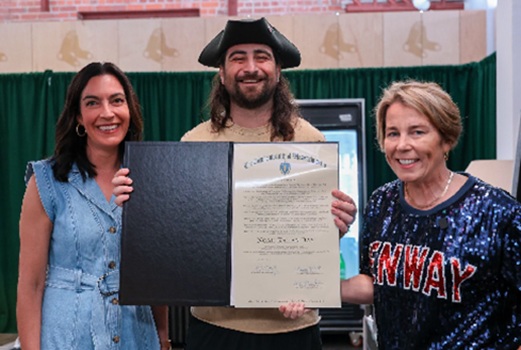
The name of the proposal is a nod to singer and songwriter Noah Kahan, who recently made history as the first artist ever to headline four consecutive sold-out shows at Fenway Park. Kahan has been a vocal opponent against predatory resale practices and successfully advocated for a similar bill in Vermont.
“Far too many Massachusetts residents have experienced the pain of being excited to buy tickets to see their favorite singer or sports team, only to realize that resale prices and fees have driven up the cost to outrageous levels,” said Governor Healey. “Or how about when you do purchase tickets from a reseller, only to get to the venue to realize the seller never actually transfers them to you? Enough is enough. We are taking action to lower ticket resale prices so Massachusetts fans can better afford to see their favorite performer or team.”
During the press conference announcing the legislation, Governor Healey was joined virtually by Noah Kahan, who threw his support behind the measure: “I heard about what you’re announcing today and I just wanted to let you know how excited I am about it. The artist community and fans will greatly benefit from limiting ticket scalping and the sales of speculative tickets. I love my fans and want to protect them however I can. Artists alone could not tackle the market manipulation of secondary resellers. So, thank you so much for making this a priority in Massachusetts.”
Under the proposal, concert tickets cannot be resold for more than 110 percent of their original face value, unless an artist or venue explicitly authorizes a higher resale cap through a written agreement. For example, if a ticket originally cost $100, it could be resold for no more than $110.
The bill limits the service fees charged by ticket resale marketplaces to no more than 10 percent of the listed resale price for sporting events and non-sporting events like concerts. For example, if a ticket is listed for resale on a resale platform for $300, the service fee charged by the resale platform cannot exceed $30. Today, many resale platforms charge service fees of roughly 20 percent or more, adding hundreds of dollars to the cost of tickets. This proposal is expected to cut resale service fees typically paid by consumers today in half.
The legislation also prohibits the sale of speculative tickets, meaning tickets that a seller does not actually have when they list them for sale. Too often, consumers pay for these tickets only to find out they are never delivered. During this summer’s World Cup matches at Gillette Stadium, some fans who purchased tickets through online resale platforms were turned away after discovering the tickets they bought never existed.
The bill includes additional consumer protections to prohibit deceptive resale websites that falsely suggest they are affiliated with artists or venues and to prevent resellers from misleading consumers about ticket availability or scarcity.