

latest
Will Mayor Coogan be the third Fall River mayor recalled in 12 years?

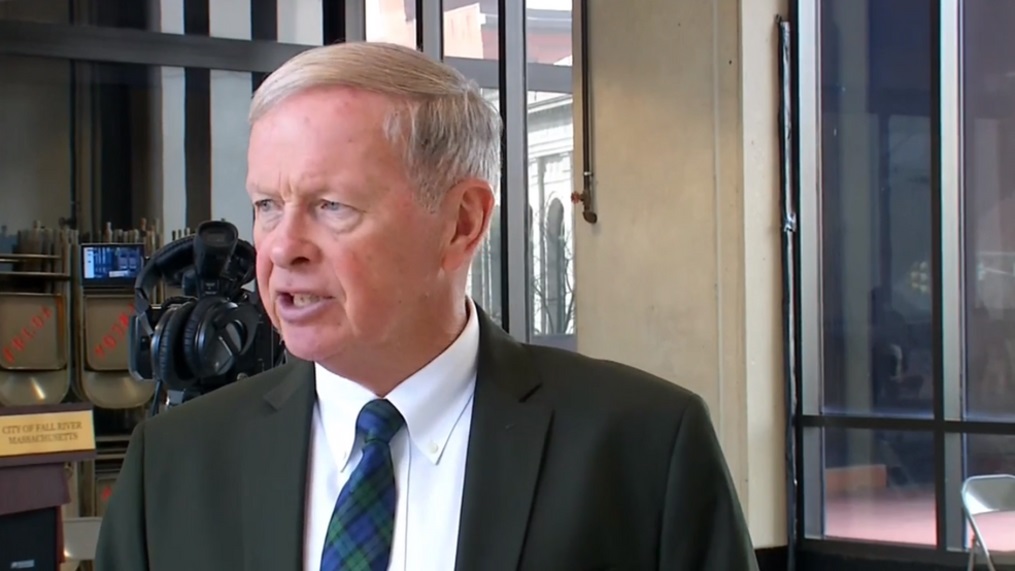
Since last November’s Fall River election, there has been talk of recalling Mayor Paul Coogan who was re-elected by just over 200 votes. It didn’t help that within days of being re-elected, Mayor Coogan announced that he wouldn’t seek re-election in 2027.
Since being re-elected in 2023, Fall River had a controversial no-confidence in a police chief who was replaced, major abuse and fraud was revealed within DCM, and the Gabriel House fire resulted in the death of 10 vulnerable elderly and disabled residents, injuring more than 30 others (including firefighters), which resulted in state-level reforms. In 2026, Fall River Public School’s Superintendent Tracy Curley resigned in March and Fall River wasn’t prepared for the recent blizzard.
What is the process to recall an elected official in Fall River?
For this story, Fall River Reporter received much of the following details on the recall process from Ryan Lyons, the Chairman and Director Fall River Board of Elections and Chief Elections Official for the City of Fall River.
Pursuant to the Municipal Charter a recall petition can be filed against an elected official 3 months after they assume office. Fall River elected officials, including Mayor Paul Coogan, City Council members, and School Committee members, were sworn into office on Monday, January 5, 2026. This means April 5, 2026 is the first day a recall could be initiated.
The first step in the process would be for 10 registered voters to file an affidavit with Mrs. Leite our City Clerk stating the name of the elected official subject to be recalled and a statement for the reasons/grounds for the recall. The Fall River Elections office would certify the names on the affidavit to ensure that the individuals are registered voters in Fall River and file a cover letter with the City Clerk. Once that process is completed, the petitioners would be issued blank petitions addressed to the City Council, as the Council would have to order a special election upon the qualification of the petitions. The petitioners would have 20 days to collect signatures from 5% of registered voters from the date of filing their affidavit.
The elections office would certify the signatures on the petitions and attach a cover letter for the City Clerk and City Council and notify the petitioners who would then file the recall petitions with the City Clerk. From there, the City Clerk would submit the petitions to the City Council to be acted upon in regard to ordering a special recall election.
If the recall effort successfully files
According to Lyons, If the recall petitions are successfully filed with the City Council, the Council will have to order the special election to take place at least 65 days following the date of the certificate being issued by the Fall River Elections office and the City Clerk. Once the election date has been established by the City Council, the Fall River Elections office would prepare the election calendar within the legal timeframes as prescribed by the General Laws and well as preparing Nomination Papers and orientation packets for prospective candidates who may decide to run in the respective election.
Per Lyons, the specific language that governs recall elections was adopted by voters in the 2015 Fall River Municipal Election, with no changes to the Municipal Charter since that time – meaning nothing has changed since the Jasiel Correia recall election that allowed him to get recalled and then re-elected on the same day.
Fall River has a recent history of recalls
The city of Fall River has a tumultuous recent political history marked by two high-profile mayoral recalls within five years, highlighting deep voter discontent, allegations of misconduct, and the unpredictable nature of direct democracy in local governance.
In 2014, Will Flanagan, who had served three terms as one of the city’s youngest mayors, faced a successful recall effort. Flanagan had been a visible and ambitious leader, but criticism mounted over his management style, policy decisions, and interpersonal conflicts. A recall petition gained traction in the summer of 2014, leading to certification by the city council and a special election in December.
Voters decisively removed Flanagan from office, with 10,631 votes in favor of recalling him and 4,669 votes against (nearly 70% in support of removal). In the simultaneous mayoral replacement vote among eight candidates (including Flanagan), Bristol County DA Sam Sutter won with 6,021 votes (about 36.77%), while Flanagan received 4,393 votes (26.83%) and placed second.
Just a few years later, Fall River voters confronted another embattled mayor: Jasiel Correia, who succeeded in the political vacuum left by Flanagan. Correia’s tenure began with promise but unraveled dramatically when federal prosecutors charged him in 2018 with fraud, extortion, and related offenses tied to allegedly defrauding investors in a smartphone app he had developed while in office. Despite the indictment and calls from the city council for his resignation, Correia refused to step down. A recall petition succeeded in forcing a special election in March 2019.

The outcome was extraordinary and paradoxical. A majority of voters chose to recall Correia, formally removing him from office. Yet, on the same ballot, a second question asked whom to install as mayor if the recall passed—and Correia himself received more votes than any of the other candidates vying to replace him. In a rare twist enabled by the city’s charter rules, he was both ousted and re-elected on the same day, allowing him to reclaim the office immediately. This bizarre result underscored polarized loyalties in Fall River, where some residents viewed the federal charges as politically motivated or separate from his mayoral performance, while others saw them as disqualifying.
These back-to-back recalls reveal a pattern of volatility in Fall River’s politics: intense scrutiny of mayoral conduct, the potent tool of citizen-initiated recall, and the capacity for voters to express contradictory sentiments in a single election.
Ironically, Current Mayor Paul Coogan, who went on to defeat Correia later that year is now facing calls for a recall online. If successful, Fall River will have notoriety of recalling three mayors over a 12 year period.
Will there be a recall?
Yesterday, the Committee to Recall mayor Paul Coogan Facebook page announced that they were pausing their recall effort.
After careful consideration, the committee to recall Paul Coogan has decided to pause the recall effort that was planned for April.
While we have heard strong support from many in the community, the reality is that not enough individuals have stepped forward to participate in gathering signatures. We have also heard from residents across the city, including many who supported Boomer Amaral in the last election, and even among that opposition there is not enough support at this time to move a recall forward. There is a sense of recall fatigue, and many are not ready to take this step so soon into a new term. Simply put, the momentum needed for this effort is not there right now.
But this is not the end. It is a shift in strategy.
Moving forward, the committee will focus on building for the future by recruiting strong candidates for the next mayoral election and other down ballot races, holding this administration accountable, and organizing a sustained grassroots effort to challenge the long standing Highland Fiola establishment that has shaped this city for far too long.
We encourage you to stay engaged. Even without an active recall, our work continues. We will keep organizing, holding rallies, and bringing residents together. Right now, one of the biggest challenges facing the opposition is a lack of organization, and that is something we must change. A strong, functioning community depends on people who are willing not only to show up and speak out, but to build a more organized, united movement that can create real impact.
We also invite you to begin using our new logo as a symbol of that shared commitment.
This moment is not a setback. It is an opportunity to regroup, grow stronger, and build the foundation for real, lasting change. Stay involved. Stay informed. And stay ready.
Fall River political winds shift fast. There is no telling if the announcement is a pause or the end of the recall. There may be other dissatisfied voters that aren’t associated with the recall Facebook page that could file a recall. Only 10 registered voters are needed to file an affidavit to kick off the recall process.
April 5th, 2026, is the official day the recall process could start. It’s not a mandated start date, it’s just the first day the recall process can start. There doesn’t appear to be an appetite at this moment to spend the 10s of thousands of dollars on a recall, but if there is another controversy involving the mayor this year, expect the recall effort to gather steam again.