

latest
“We Expect Audits to Double or Triple”: Massachusetts Braces for Federal Fraud Crackdown

BY ELLA ADAMS
With federal prosecutors pledging that anti-fraud investigations will lead to results soon, state health and human services officials are adding more staff to those who are already guarding against public benefit fraud in anticipation of an increase in federal audits.
“We just expect that the amount of audits and requests that we’re going to get is probably going to double to triple over the next few months,” Health and Human Services Secretary Kiame Mahaniah told lawmakers at a budget hearing in Clinton on Friday.
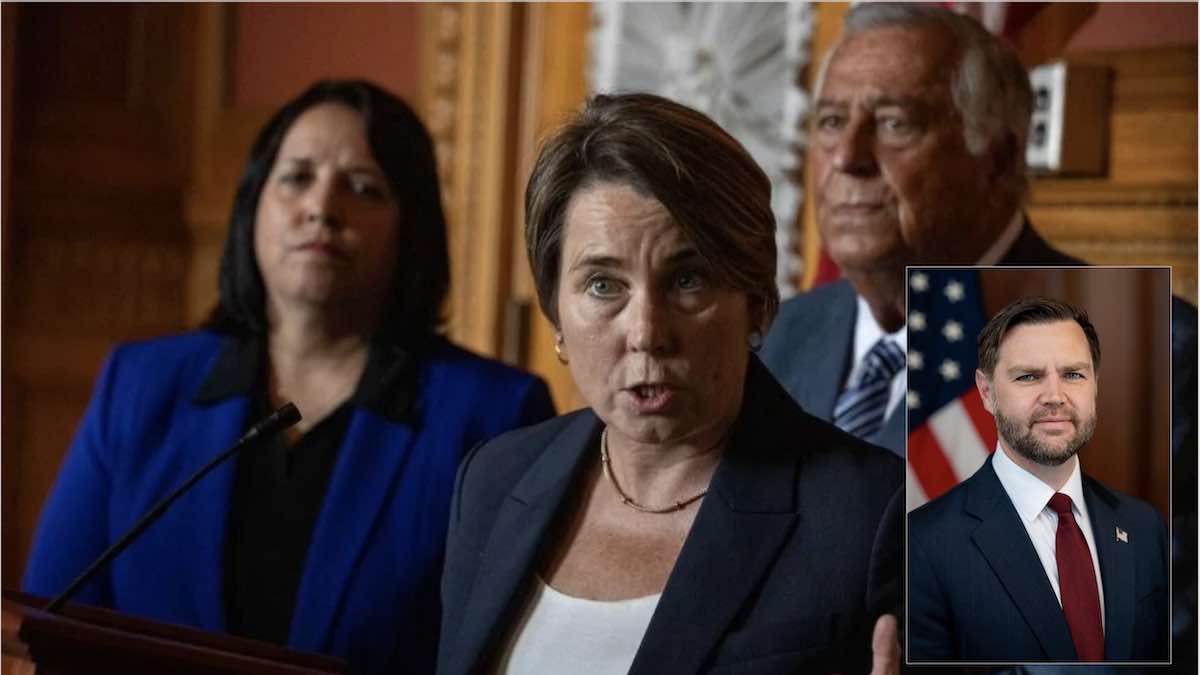
Warren Republican Rep. Todd Smola asked fraud-related questions during the Ways and Means Committee hearing, referring to a recently-established Task Force to Eliminate Fraud led by Vice President JD Vance.
“Massachusetts is on the radar screen,” Smola said. “I’m a little bit discouraged to see some of the commentary from the governor relative to the level of cooperation that’s going to happen here.”
The Trump administration is targeting Medicaid fraud, and the House Energy and Commerce Committee requested information related to Medicaid from 10 states, including Massachusetts, California, Colorado, Maine, Nebraska, Oregon, Pennsylvania, Vermont and Washington. Energy and Commerce Chair Brett Guthrie’s office stated that “each of these states displayed concerning cases of Medicaid fraud over the last several years.”
Healey has maintained that MassHealth, the Department of Transitional Assistance and other agencies have strong program integrity operations.
“If we have nothing to hide, relative to program integrity and how our programs get rolled out in this commonwealth, then we should have no problem cooperating,” Smola said. He asked Mahaniah for assurance that the state will cooperate with the federal government.
“We’re very proud of the amount of activities that we do under program integrity, in terms of both pre-paying — what we do in terms of monitoring our pre-pay through algorithms and making sure that there’s nothing weird showing up — and how we credential and monitor our vendors and our providers, but in also how we do audits and post-pay claim reviews,” Mahaniah replied.
“I think it’s unavoidable that we will be collaborating quite extensively with the federal government,” Mahaniah continued. “In terms of the way that the agencies and our secretariats work, we are pretty much hand-in-glove in terms of how we administer these programs. The federal rules and regulations form the backbone of what we are allowed to do and how we do it through the 1115 waiver that MassHealth has.”
The state’s five-year MassHealth waiver expires at the end of 2027. MassHealth plans to submit a request to extend its waiver in late 2026. Among other changes surrounding Medicaid that will be ushered in under provisions of the One Big Beautiful Bill, MassHealth will be required to check eligibility for certain members and require work, education or volunteering for some.
Mahaniah noted “up-staffing” within his secretariat to help with program integrity efforts after Smola asked if he needed anything from the Legislature to help.
“We just need to have the right amount of people and right amount of technology to be able to answer these requests,” Mahaniah said. “They tend to have two or three weeks’ turnaround, so just making sure that we don’t have any choke points in terms of staff and resources.”
Mahaniah added that MassHealth Undersecretary Mike Levine reminds him that in “normal conditions,” they have between 10 and 12 audits ongoing.
“Given just the political nature of things, we expect to undergo many more audits than usual, and you’ve read in the media that we’ve had some back and forth,” Mahaniah said. “But so far, we have been completely open in terms of what we do.”

The deadline to respond to the Trump administration’s Medicaid-related request was March 17. The state sent a 41-page letter, signed by Mahaniah, in response to Guthrie, Oversight and Investigations Subcommittee Chair John Joyce, and Health Subcommittee Chair Morgan Griffith.
The letter included answers to questions including those about specific program integrity measures in place to prevent fraud, waste and abuse in the state’s Medicaid system; the process for making criminal referrals for suspected fraud to law enforcement; the programs that have seen abnormal increases in recent years; site visits; and details about Medicaid overpayments and recoveries.
Mahaniah wrote that program controls include analytics, pre-pay review and post-pay provider audits, and coordination with law enforcement. The letter states that over the last three years, those fraud, waste and abuse prevention activities “have included over 1,200 individual provider audits and claim record reviews as well as 88 algorithmic claim data reviews,” many of which recur annually.
MassHealth has a designated Audit Response and Fraud Enforcement team, per the letter, which receives allegations of fraud from staff and external stakeholders, submits referrals to the state’s Medicaid Fraud Division (MFD), and keeps MassHealth leadership informed of those referrals.
“MassHealth refers credible allegations of fraud to MFD and implements payment suspensions. When MassHealth imposes a payment suspension, it issues a notice of withhold to the provider, directs its accounting systems to stop payments, and instructs MassHealth managed care plans to suspend payments to the provider,” the letter said, explaining steps taken to sanction or disenroll fraudulent Medicaid providers.
The letter also inquired about overpayments. In 2025, total overpayments included $165.3 million, Mahaniah wrote. Those overpayments exclude fraud-related payments that are reported by the division, he clarified. At an earlier budget hearing in March, Transitional Assistance Commissioner Michael Cole also made a distinction between fraud and the overpayments and underpayments accounted for within the Supplemental Nutrition Assistance Program payment error rate, another metric the federal government is focused on lowering.
Since provider audits and recoveries can span across years, the recovery and recoupment totals of improper Medicaid overpayments won’t match with the identified overpayments, the letter said. In 2025, there were $117.1 million in total recoveries and recoupments. The majority of MassHealth’s controls operate before payment, according to the letter, which means “a significant share of improper payments are stopped before dollars go out the door, ensuring that they never have to enter the payment recovery pipeline.”
Since January 2021, Mahaniah wrote, MassHealth has implemented 105 payment suspensions as part of its program integrity program.
U.S. Attorney for Massachusetts Leah Foley has committed to rooting out fraud in the state’s Medicaid system alongside her federal counterparts. She announced on Thursday that Assistant U.S. Attorneys Philip Mallard and Mark Grady will work as fraud coordinators to lead a new Benefit and Voter Fraud Team, which her office said was created “in response to the rampant fraud being uncovered in Massachusetts.”
According to her office, Foley has charged 15 individuals with nearly $9 million in fraud since December 2025, including SNAP benefit fraud and MassHealth fraud.
“It has become apparent that there are insufficient guardrails in place in Massachusetts to address the rampant benefit fraud across the state. It is time to hold criminals stealing taxpayer benefits accountable. This has gone on far too long and the buck stops with me,” Foley said in a March 26 press release.
Foley described the fraud her office has uncovered as the “tip of the iceberg,” adding, “We have dozens of investigations in the pipeline that will come to fruition in the coming weeks.”
Asked on Monday after a closed-door meeting with legislative leadership for her reaction to Foley’s new team, Gov. Maura Healey said, “Any fraud that’s out there, I support going after and stopping and shutting down.”
“I did that as Attorney General. I continue to do that as governor through the program integrity work of our agencies, where if we have suspicions of fraud, we immediately take action, we report those to the attorney general’s office. We report those to the U.S. attorney’s office,” Healey continued. “I also am not quite sure what the U.S. attorney was meaning by a new fraud unit — there is existing within that office already, a Medicaid Fraud Unit. I mean, as attorney general, my Medicaid Fraud Unit used to work directly with that one.”
Asked by a reporter if she thinks the state is being unfairly targeted, Healey said, “What do you think?” and did not answer the question.