

Crime
United States postal employee in Massachusetts accused of stealing over $330,000 from mail

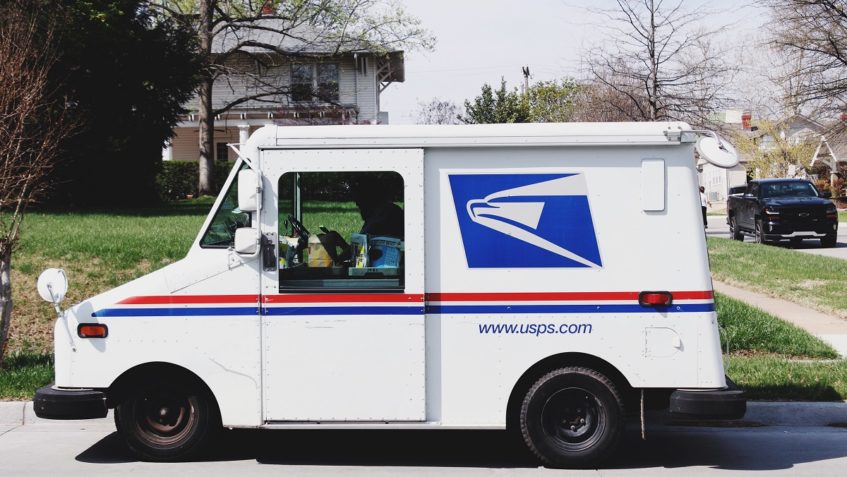
Boston – Authorities have detained and indicted a now former U.S. Postal Inspector accused of pilfering more than $330,000 from mail sent by senior citizens who fell victim to scams. He is also charged with laundering the funds and neglecting to disclose them to the IRS.
Prosecutors claim he spent the ill-gotten money on items such as a backyard pool deck with illumination, a stone bar top outside, vacation costs for a trip to the Caribbean, and services from companions. Additionally, he reportedly took money from a secure evidence storage and shifted responsibility to a subordinate.
According to the Massachusetts Department of Justice, Scott Kelley, 51, from Pembroke, Massachusetts, faces a 45-count federal indictment issued by a grand jury in Boston. The counts include five for wire fraud, five for mail fraud, five for theft of mail by a postal employee, one for stealing government funds, 23 for money laundering, one for evading financial reporting through structuring, and five for submitting inaccurate tax filings. Kelley is slated to appear initially in Boston’s federal court later today.
Kelley served as a Postal Inspector at the U.S. Postal Inspection Service’s Boston headquarters, the investigative branch of the Postal Service. Between 2015 and June 2022, he led the Mail Fraud Team, which handled cases involving sweepstakes frauds and similar schemes aimed at older adults and at-risk groups. In June 2022, he moved to head the Mail Theft Team, a role he maintained until August 2023.The charges detail that the USPIS operated a countrywide initiative called Jamaican Operations Linked to Telemarketing to dismantle postal scams from Jamaica that deceived American citizens with bogus claims of lottery or prize wins. Fraudsters, pretending to be prize officials, reached out to seniors and susceptible individuals, convincing them to send money via mail for supposed charges or levies required to claim rewards. JOLT inspectors could halt suspicious parcels from scam targets, but opening them needed the shipper’s approval; otherwise, they had to return the items. If approved and cash was inside, the inspector needed a colleague to witness the count, then convert it to a certified check for the sender.
From January 2019 through August 11, 2023, Kelley allegedly sent misleading messages to prompt unaware postal workers to seize packages flagged by a USPIS system as probable scam mailings and forward them to him. In all, he purportedly directed the interception and delivery of around 1,950 parcels. He is accused of examining those that seemed to hold money and taking any money found.
The legal document names seven people tricked into dispatching cash in packages that Kelley supposedly seized and robbed. Their average age was 75, the eldest being 82, with amounts ranging from $1,400 to $19,100.
Kelley is said to have employed a colleague’s access code to enter a USPIS evidence room. Inside, he used another’s key to access a storage compartment and remove $7,000. He reportedly drafted a document accusing the other inspector of the loss, triggering an inquiry by the USPS Office of Inspector General. During questioning,
Kelley purportedly funneled and expended nearly $340,000 in cash while concealing its origins. He used about $160,000 to acquire postal money orders, mostly deposited into his accounts or applied to credit debts. He also placed more than $130,000 into his accounts.
It is further alleged that Kelley also used some of the stolen cash to pay for goods and services including:
· $20,500 for the installation of a patio around his pool:

· $2,000 to have his pool heated;
· $2,800 to have a granite countertop installed on his outdoor bar:
· $4,888 to have lights installed around his pool and outdoor bar;
· $4,300 for bar drinks and other expenses incurred during three Caribbean cruises; and
· $15,400 for sexual services provided by two escorts with whom he texted using a burner phone and whom he met during workdays.
Individuals who suspect they are affected by this matter or similar fraud targeting seniors should email USAMA.VictimAssistance@usdoj.gov. Potential postal scams can be reported to the U.S. Postal Inspection Service via their website or by dialing (877) 876-2455.
Each wire fraud charge carries up to 20 years imprisonment, three years supervised release, and fines up to $250,000. Mail fraud charges similarly allow for 20 years in prison, three years release, and $250,000 fines. Mail theft by a postal worker permits up to five years incarceration, one year release, and $250,000 fines. Stealing government funds offers up to 10 years prison, three years release, and $250,000 fines. Money laundering counts provide for up to 20 years prison, three years release, and fines up to $500,000 or double the transaction value, whichever is larger. Structuring allows up to five years prison, one year release, and $250,000 fines. False tax return charges carry up to three years prison, one year release, and $100,000 fines. Judges impose penalties based on federal guidelines and relevant laws.
The announcement was made by U.S. Attorney Leah B. Foley; Michael Ray, Special Agent in Charge for the U.S. Postal Service Office of Inspector General’s Office of Professional Responsibility, Technical and Sensitive Operations Field Office; and Tom Demeo, Acting Special Agent in Charge for IRS Criminal Investigation in Boston. Assistant U.S. Attorneys Christine Wichers and Dustin Chao from the Public Corruption & Special Prosecutions Unit are prosecuting the case.
The details contained in the charging document are allegations. The defendant is presumed to be innocent unless and until proven guilty beyond a reasonable doubt in the court of law.