

latest
Senate Eyes Broader “Safe Spaces” Protections for Immigrants Beyond Courthouses in Massachusetts

BY ALISON KUZNITZ
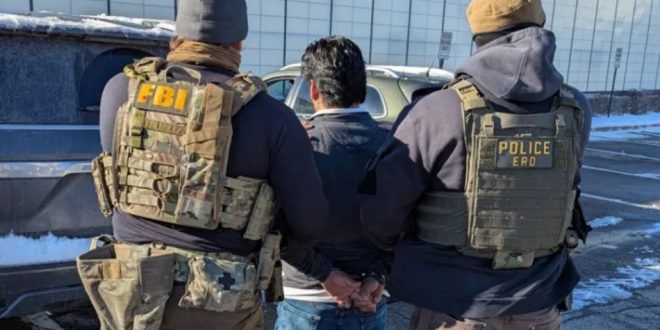
The Senate’s forthcoming approach to shielding immigrants from federal enforcement tactics may include guardrails around additional places beyond courthouses.
“I would observe, not necessarily speaking for what the Senate will ultimately do, but the House bill, in terms of the safe spaces, spoke only to courts,” Sen. Will Brownsberger told the News Service on Tuesday when asked about any potential differences between the branches’ approaches. “And of course the governor also spoke to schools, hospitals and churches. And you know, that’s a place where we might build on that a little bit.”
The House on March 25 passed the so-called PROTECT Act (H 5316), which blocks federal agents from making civil immigration arrests at courthouses. But providers with the Massachusetts Medical Society, who were on Beacon Hill that day for an advocacy event, pointed out the House measure stopped short of Gov. Maura Healey’s proposal to keep federal Immigration and Customs Enforcement agents out of other places, including nonpublic areas of hospitals and other medical facilities.
Brownsberger called the House bill a “good step forward.” The Senate version is likely to incorporate a Brownsberger proposal (S 2976) that had a hearing before the Judiciary Committee on Tuesday and would provide legal remedies for residents whose constitutional rights are violated by federal law enforcement.

“We think this will fill some gaps in existing law because there are a number of civil rights violations for which there is no remedy for recovery if the perpetrator is a federal agent,” the Belmont Democrat said.
Brownsberger’s bill is drafted to “withstand judicial scrutiny,” said Jane Bentrott, counsel at the nonprofit Protect Democracy United. She said holding federal officials legally accountable, just as their local and state counterparts already are, is “urgently necessary” following two civilian deaths in Minnesota.
“Moreover, this bill could protect your constituents’ rights in many more contexts,” Bentrott said. “For example, if universities are subjected to pretextual funding cuts to punish protected First Amendment behavior, if businesses face weaponized regulatory scrutiny to influence corporate decision making for corrupt objectives, if residents are confronted with warrantless searches or seizures, they will be able to sue the enforcement officers personally, no matter their badge.”
The Senate plans to tackle immigration protections “over the next few weeks,” Brownsberger told the News Service.
“It’s one of the bills that we just have to do, and we will do,” he said.