
STATE HOUSE, BOSTON, April 16, 2026…..It was a 10-cent fee that stirred opposition to a $3.67 billion environmental bond bill.
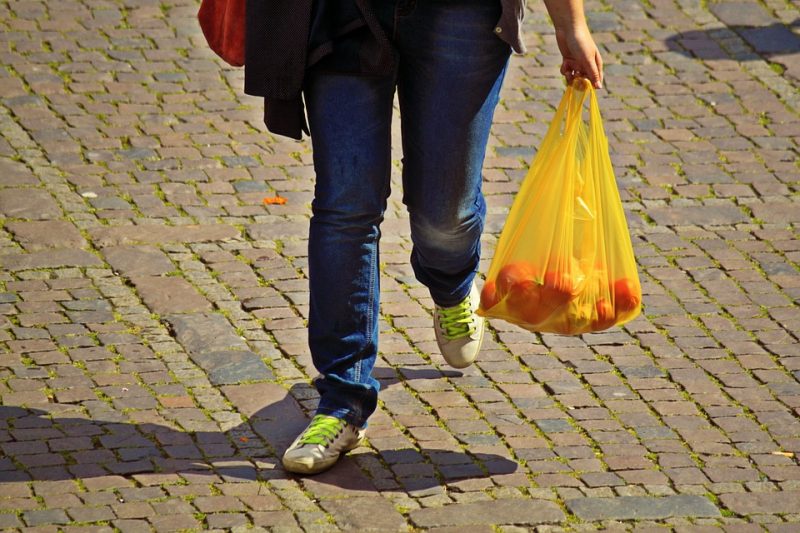
The bill, which the Senate voted 36-3 to pass Wednesday night, adds a 10-cent fee for recycled paper bags provided by retailers. These are listed as an acceptable alternative to the single-use plastic bags the bill bans along with self-service of single-use plastic disposable utensils and other food service products. Retailers could only provide food service ware when a customer asks for it.
“This tax really compromises the integrity of this great bill,” Sen. Kelly Dooner, one of three senators who voted against the bill, said during the session. The main thrust of the bill is investment in climate resilience improvements, land conservation efforts, clean water and more.
Dooner spoke in favor of an ill-fated amendment brought by Senate Minority Leader Bruce Tarr to remove the 10-cent fee. Tarr argued the fee could be considered a tax because it functions similarly to the sales tax.
He added that Bay State residents are already facing rising costs in a myriad of sectors.
“Folks are going to say, ‘Don’t I already pay the highest electricity costs, property taxes, highest health care costs as well as other fees and taxes that threaten our competitiveness in the U.S.? And you have to come at me for the bag I bring home food to eat?'” Tarr said during the session while introducing his amendment, which was rejected.
Half of the 10-cent fee goes to the retailer and the other half goes to a new state Plastics Environmental Protection Fund, which would be used to help low-income people get reusable shopping bags.
Sen. Rebecca Rausch disagreed that the fee acts like a tax, adding the fee only applies if a customer needs a paper bag. She said the state’s portion of the collections go right into the new fund.
Rausch also said more and more shoppers are bringing their own reusable bags to the store, exempting them from the 10-cent fee. Almost half of Massachusetts municipalities already restrict single-use plastic bag use.
“When we know we’re going to go grocery shopping, we just pick up the bags and bring them with us to the store. It’s actually not that hard,” said Rausch, Senate chair of the Joint Committee on Environment and Natural Resources. “So, once in a while, if you forget your bag, maybe you have a dime in there to cover your paper bag use.”
Several other states have similar provisions and about two-thirds of Massachusetts citizens live in a municipality with plastic bag restrictions in place, she said.
The local chapter of the National Federation of Independent Businesses urged senators to vote against the bill ahead of the session Wednesday, arguing that it was chock full of “provisions detrimental to Main Street businesses and their customers” like the restrictions on plastics, fee on paper bags and a new fee on cans of paint.
“The last thing Commonwealth small businesses need is additional mandates, fees, and taxes that make owners’ jobs more difficult and products and services more expensive for their customers,” NFIB Massachusetts State Director Christopher Carlozzi said. “Customer satisfaction is vital to small businesses, and making service ware like straws, condiments, napkins, containers, etc. ‘by request’ only could disrupt that business-consumer relationship. If a customer drives away forgetting to request a straw for their ice coffee or milkshake, they will blame the business for not including it, just as with other proscribed items that are expected by consumers.”

The Senate approved similar single-use plastics restrictions, including a bag ban in 2019 that never emerged for a vote in the House and another one in 2024 that met the same fate.
When asked about the Senate’s plastic proposal last week, House Speaker Ron Mariano said, “We’ve always sort of stayed away from a statewide mandate because we felt that there was a bit of a burden on small businesses and the mom-and-pop stores that populate some of our big cities. We wanted to give each city and town the opportunity to decide for themselves.”
“So we’ll take a look at what they send over and what the standards are for implementing the ban,” he added.
Asked about the fact that the Senate has proposed similar plastic restrictions several times without success in the House, Spilka said, “It’s taken us two or three times in the past to get things through. If we believe in something, we don’t give up.”
Rausch noted that the fee on paper bags would not apply at some small businesses.
Businesses that meet the following criteria would be exempt from the bill’s plastic bag provisions: just one location, with an area spanning no more than 4,000 square feet; no more than 10 employees; and provided no more than 10,000 carryout bags during the previous calendar year.
“We realized that some things are really difficult for small businesses to implement, and we can, in fact, do many things at once,” Rausch said. “We can both take care of our small businesses and also take care of our environment at the same time.”
During the session, Rausch said less than 10% of plastic is actually recyclable and Massachusetts threw out 900,000 tons of plastics in 2022 alone.
Senate President Karen Spilka said she was inspired to call for a decrease in plastic use after seeing the “devastating impact on marine animals.” She said animals like turtles can starve to death because they fill their stomachs with plastic bags, restricting their ability to eat anything else.
“As we work to green our daily lives, I believe the start of replacing plastic bags with safer alternatives is a time that has long come,” Spilka said.
Advocacy groups including Massachusetts Public Interest Research Group, or MASSPIRG, expressed support for the plastics ban.
“Reducing the use of plastic bags is a simple, commonsense way to get rid of some of the plastic pollution plaguing our environment,” Executive Director Janet Domenitz said in a statement.
[Ella Adams contributed reporting.]
Katie Castellani is a reporter for State House News Service and State Affairs Pro reach her at kcastellani@statehousenews.com.