
Health
Massachusetts Rep striving for “everyone who is willing” to carry Narcan

By Chris Lisinski
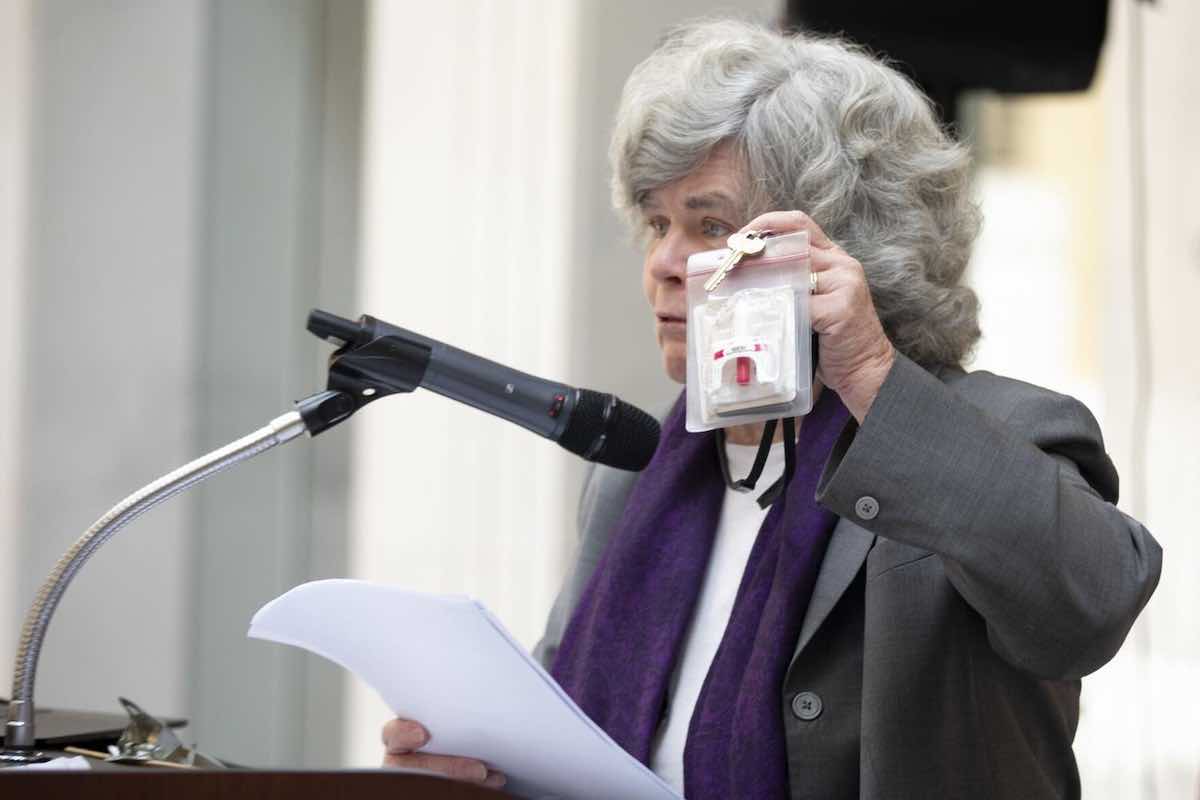
Rep. Kate Donaghue has a trick for always ensuring naloxone is on hand and ready to deploy if she encounters someone experiencing an opioid overdose: she keeps a dose tucked into the laminated pouch holding her State House ID.
Donaghue, whose son, Brian, died in 2018 to an overdose, on Tuesday hosted dozens of her colleagues, administration officials, public health workers and others for a training session about how and when to use naloxone.
Attendees piled into the State House’s Great Hall, where one table was filled with pre-packaged Narcan kits, to learn more about the opioid epidemic and the role that the overdose-reversal drug plays in keeping people alive.

Provisional data from the U.S. Centers for Disease Control estimate a nearly 33% drop in predicted overdose deaths in Massachusetts from 2023 to 2024, and Donaghue attributed much of the improvement to the availability of naloxone, often known by the brand name Narcan.
“When Narcan was first available, we were working on getting it into the hands of first responders and people interacting with those at high risk of overdose,” Donaghue said. “Now, we try to get Narcan into the hands of everyone who is willing to carry this life-saving medication.”
Stephen Murray, the associate director of overdose prevention at Boston Medical Center and program director of the SafeSpot Overdose Hotline, ran the training after an extended speaking program featuring other officials and providers.
“We need to celebrate people who have recovered. We need to help people along the way when relapse is part of this journey. And we have to remind ourselves that nobody recovers if they’re not here,” Health and Human Services Secretary Kate Walsh said. “Narcan is really fundamental to our ability to make sure that people are here to experience the joys and wonders and trials and tribulations of recovery.”