Community
Massachusetts officials warning public after invasive pest spotted in Fall River, other communities

BOSTON — The Massachusetts Department of Agricultural Resources is asking the public to keep an eye out for the invasive pest known as spotted lanternfly as the pest is now active and has been seen in several parts of Massachusetts, including Fall River.
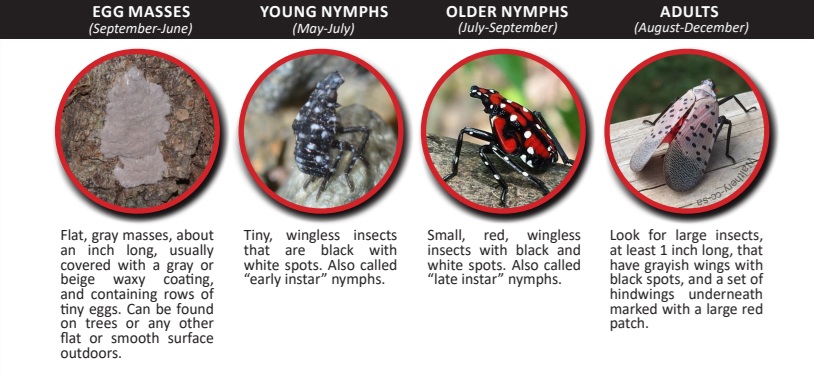
In addition to the agricultural impacts it causes, spotted lanternfly has the potential to negatively impact outdoor activities due to the swarming behavior of this pest when the adults appear in the late summer. SLF egg masses are about an inch and a half long, and are flat and gray in color, making them difficult to detect, especially on tree bark.
Spotted lanternfly is a sap-feeding insect that has caused significant impacts to vineyards, orchards, and other agricultural commodities in states where it has become established. SLF not only harms grapevines, maples, hops, blueberries, and over 100 other host plants, but has been observed to impact outdoor recreation in other states where populations are high and adult lanternflies swarm in large numbers during mating season.

“SLF can be removed from an area using a shop vacuum or other type of canister vacuum. Vacuum the spotted lanternflies off the surfaces they are resting on, being careful not to damage delicate leaves or new plant growth. Although most of the spotted lanternflies will be killed by the vacuuming process itself, some may survive. Leaving them in the canister for a day or two before emptying will ensure that they are all dead. Make sure to empty and clean the vacuum shortly after that, otherwise the dead lanternflies may start to rot and smell, especially in high temperatures. You can also transfer the contents of the vacuum into a trash bag, seal it, and place it in a freezer for at least 24 hours to euthanize any SLF that are still alive.
“There are two main types of traps used to catch spotted lanternfly: circle traps and sticky bands. Both traps are placed on trees and use the natural movement of SLF up and down the tree over the course of the day to catch the insects. If you decide to use sticky bands, be sure to place a raised guard of mesh wire around it to prevent birds, bats, and other nontarget animals from being caught on the sticky surface. You can learn how to build both types of traps here: https://bit.ly/ SLFTrapping.
“If you see small numbers of SLF adults or nymphs, especially on vehicles or on materials being moved out of an infested area, squish or smash the insects to destroy them. Hand removal of insects is not effective to control larger infestations.


“Egg masses can be destroyed by scraping them off the surface you find them on, using a plastic card or putty knife. Press down and squish the eggs as you scrape them, pressing until they pop to ensure you’ve crushed them. Or scrape the egg masses directly into a plastic bag or other container filled with rubbing alcohol or soapy water, and leave them for at least 24 hours before disposing of them. Be sure to check any flat surface for egg masses, not just trees.
If you see any signs of spotted lanternfly, please report it to MDAR at https://massnrc.org/pests/slf.


