
Sam Drysdale
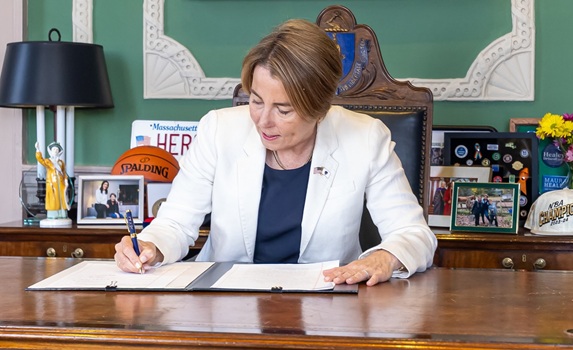
June 12, 2026…..Gov. Maura Healey on Friday signed a $1.56 billion transportation and education spending bill and legislation updating disability-related language in state law.
The supplemental budget directs surplus revenue generated by the surtax on wealthier households toward major investments in the MBTA, special education reimbursements, child care and relief from the costs of clearing municipal roads this winter. Healey also approved a separate bill replacing hundreds of outdated references to people with disabilities in Massachusetts statutes, culminating a legislative effort that supporters said stretched more than two decades.
The spending package marks another major deployment of revenue generated by the voter-approved constitutional amendment imposing an additional 4% tax on annual income above $1 million. The new tax continues to spin off large amounts of revenue for education and transportation, while other areas of state spending are dependent on slower growing tax revenue sources.
The law appropriates roughly $1.35 billion in surtax revenue, including about $780 million for transportation and $574 million for education initiatives. The compromise emerged from weeks of negotiations between House and Senate leaders, who had differed on how heavily the money should be concentrated on MBTA investments versus broader regional transportation and education priorities.
The largest single investment is $595.5 million for the MBTA. The funding is intended to rebuild operating reserves, support infrastructure improvements, expand low-income fare discounts and bolster workforce and safety initiatives. The package also provides $35 million for regional transit authorities and $5 million for grants supporting microtransit and last-mile transportation services.
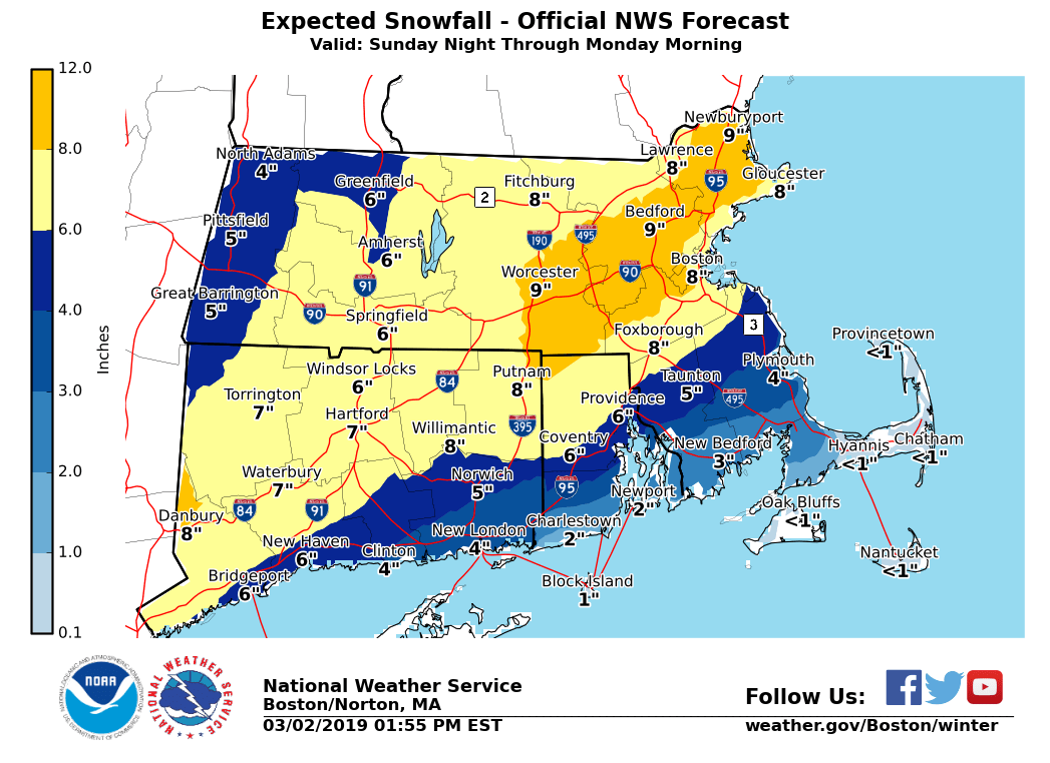
Municipal leaders had closely watched negotiations because of a proposed snow and ice relief program after a winter marked by severe storms. The law makes about $101 million available to cities and towns to offset winter maintenance expenses.
Education spending includes $152 million for special education and circuit breaker reimbursements, a priority for local officials facing growing special education costs. The package also dedicates $150 million to early education and care initiatives, including funding aimed at reducing waitlists for child care assistance and supporting educator loan forgiveness programs.
Lawmakers included $40 million for literacy efforts, evenly split between the administration’s Literacy Launch Initiative and tutoring programs. Additional education investments include $18.3 million in higher education financial aid, funding for regionalization and shared-service initiatives, and $10 million for a primary care physician scholarship program.
The law also provides $207.7 million in General Fund supplemental appropriations to address fiscal 2026 budget pressures. Major allocations include $54.4 million for sheriffs’ offices, $41.7 million for Department of Transitional Assistance staffing, $31 million for Department of Correction operations, $20 million for home heating assistance and $10 million for the World Cup held in Foxborough this summer.

Negotiators used the bill to settle a tax policy dispute that emerged after a 2025 federal law altered portions of the tax code to which Massachusetts automatically conforms. Administration officials had warned that, without legislative action, the federal changes could reduce state tax collections by roughly $442 million in the current fiscal year and more than $250 million annually thereafter.
Under the compromise, Massachusetts will phase in several federal tax changes over multiple years. The law also includes a mechanism that pauses certain conformity provisions if voters approve a November ballot question that would reduce the state’s income tax rate from 5% to 4%.
The law also includes a new sales tax exemption for building materials used in approved multifamily housing developments. Lawmakers said the measure is intended to lower construction costs and encourage housing production. The law also establishes tax incentives tied to sustainable aviation fuel and food donations by farmers.
Rep. Jay Livingstone said the disability language proposal had been under consideration for 22 years as legislators and advocates worked to identify outdated language throughout state law and ensure revisions would not unintentionally affect eligibility for programs or services.
The new law updates hundreds of references in Massachusetts statutes, replacing terms such as “mentally retarded” and “handicapped” with “person with an intellectual or developmental disability” and replacing references to a “disabled person” with “person with a disability.” It also removes other terminology that advocates say stigmatizes people by defining them primarily through their disabilities.
The enacted law does not alter eligibility standards, benefits or services. Supporters said it instead modernizes state statutes to reflect contemporary language and person-first terminology.
Sen. Patricia Jehlen, who spent years sponsoring versions of the legislation, said during debate last year that “language evolves over time, and people should be called by the words that are respectful to them.”
With Healey’s signature Friday, advocates for people with disabilities celebrated what they described as a long-awaited statutory update, while administration officials highlighted the measure as part of broader efforts to promote inclusion and accessibility across state government.
Sam Drysdale is a reporter for State House News Service and State Affairs Pro Massachusetts. Reach her at sdrysdale@statehousenews.com.