
latest
Massachusetts and Nova Scotia Sign MOU to Boost Offshore Wind and Explore Regional Power Sharing

BY SAM DRYSDALE, STATE HOUSE NEWS SERVICE
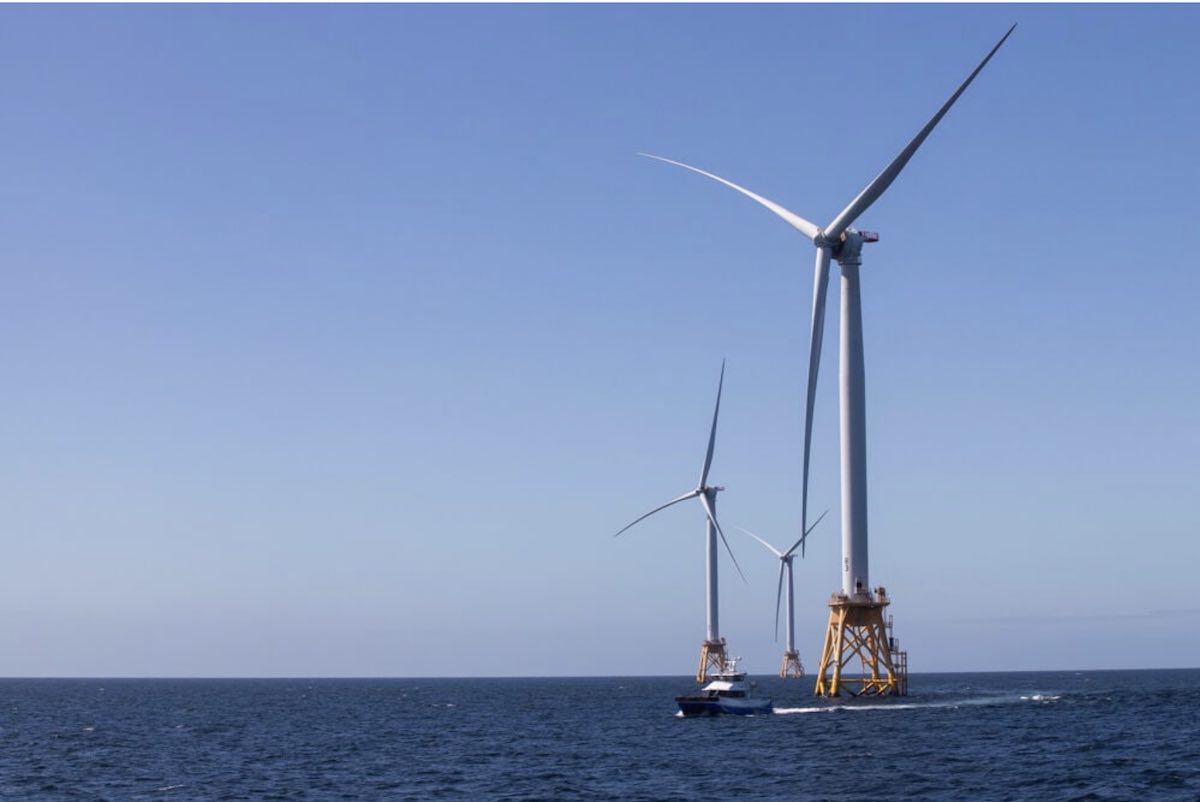
Massachusetts and Nova Scotia have a new agreement to formalize talks on offshore wind, trade expertise and future pathways for regional power sharing.
Gov. Maura Healey and Nova Scotia Premier Tim Houston signed a three-year memorandum of understanding Wednesday. It does not commit either side to power purchases or transmission construction, but lays a framework for coordination as Nova Scotia moves to build an offshore wind industry and Massachusetts looks to expand its energy supply and overcome barriers raised by the Trump administration.
Leaders positioned Massachusetts’s experience developing the industry as a potential catalyst for Nova Scotia’s nascent sector, which over time could turn into a possible source of additional power for New England.
The MOU outlines conversations on workforce development, transmission planning and grid integration, port and supply chain investments, and public engagement, with staff-level working groups directed to begin discussions and report back to agency heads.
Houston framed the agreement as a signal to developers.
“We’re on the verge of our first call for bids to license the first offshore wind projects in Canada, and we’re advancing Wind West to build the transmission infrastructure to send that clean energy to markets,” he said. “Our agreement with Massachusetts signals to developers that markets for their clean energy are solidifying.”
Nova Scotia has no operational offshore wind farms today, but has designated four offshore areas — French Bank, Middle Bank, Sable Island Bank and Sydney Bight — toward a goal of 5 gigawatts by 2030. Houston emphasized the scale of the resource relative to local demand.
“Nova Scotia only uses about two gigawatts of energy peak demand,” he said, adding that offshore potential could reach “40, 50, 60, gigawatts.” “We’ll have a lot of excess energy. We want to get that to a market somewhere.”
Massachusetts leaders said the agreement reflects lessons learned from years of offshore wind development efforts, including Vineyard Wind I, which began producing power in January 2025 and is nearing completion at 572 megawatts.
Energy and Environmental Affairs Secretary Rebecca Tepper pointed to the extensive planning associated with large-scale energy projects.
“I say this a lot, but if you’re going to start an energy infrastructure project, the best time to do that is today. They take a while and they take a lot of planning and they take a lot of coordination,” Tepper said.
The MOU outlines cooperation on interregional transmission and grid integration, including exploring offshore transmission concepts and bi-directional options, as well as coordination on ports, vessels, and workforce pipelines. It also contemplates possible non-binding requests for information to assess technical feasibility, costs and regulatory pathways for delivering offshore wind energy from Nova Scotia to New England.
Reporters pressed leaders on how the effort might differ from the decade-long, politically fraught New England Clean Energy Connect transmission project that has begun carrying Hydro-Québec power through Maine.

Healey responded by situating the agreement within broader energy demand pressures.
“We just need a lot more energy,” she said, citing growth in electricity-intensive industries and winter affordability concerns. She said the MOU is part of her “all of the above approach” to meeting energy needs.
Healey on Friday applauded the Department of Public Utilities’ approval of an Eversource gas supply contract tied to an expansion on an existing Algonquin natural gas pipeline segment.
“We need an all-of-the-above approach to meet our energy needs — solar, gas, wind, hydro, storage, and nuclear,” Healey said.
Asked about offshore wind’s performance during the recent cold snap, Tepper said Vineyard Wind “performed very well this winter,” adding that if additional power projects hadn’t been paused or delayed it would have meant “much lower prices” and “better reliability.”
The questions came amid scrutiny of renewable performance during extreme weather.
A Jan. 26 press release from Nova Scotia Power described record demand during a deep freeze, when onshore wind output dropped sharply during peak evening hours, forcing reliance on other resources, neighboring utilities and grid-scale batteries to avoid load shedding.
The majority of the province’s energy is supplied by Nova Scotia Power, and wind can account for up to about 600 megawatts when conditions are favorable. During the cold snap, typical winter demand of around 1,700 megawatts spiked to a record 2,481 megawatts on Sunday evening, at the same time wind output declined, falling from 350 megawatts earlier in the day to 75 megawatts during peak demand, according to the release.
On next steps, Healey said the charge is to “get the teams together and figure out what we need to do,” while Tepper said work groups would tackle each MOU topic and report back.
Houston said Nova Scotia’s next phase involves working with its federal government on market assessments and transmission feasibility.
“We’re at the end of the line,” he said. “We’re going to generate a lot of energy … and we need to get it somewhere.”
Tepper also connected the agreement to other regional transmission efforts, including coordination with ISO New England on a competitive transmission procurement and efforts to unlock onshore wind in Maine.
The conservative Fiscal Alliance Foundation, which has promoted energy from nuclear and natural gas, warned that offshore wind imports could prove “expensive” and “unreliable,” citing cold-weather constraints and recent hydropower interruptions. “In theory, importing power from Canada sounds appealing. In reality, Canada needs electricity at the same time we do,” Executive Director Paul Diego Craney said.