

This was a letter submitted to Fall River Reporter and was not written by us.
By Seth Aitken
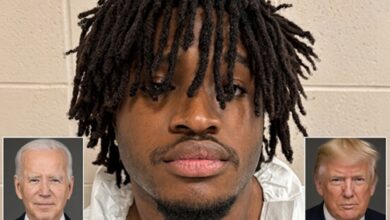
During its tenure, the Massachusetts Parole Board has unleashed a parade of dangerous criminals on an unsuspecting public. Their efforts have resulted most recently in Tyler Brown, one short year after being released early from his state prison sentence, rampaging down a busy Cambridge Street, shooting at vehicles and pedestrians.
The Governor could immediately give residents some small peace of mind and show a modicum of respect toward law enforcement by firing the Parole Board. But she won’t. The Parole Board’s progressive approach to their work is reflective of a broader anti-accountability philosophy held by this Governor and most members of the Legislature. They not only put residents at risk but also systematically undermine public safety and make it harder than ever for cities and towns to recruit and retain officers.
For context, in 2020, Tyler Brown was prosecuted for shooting at Boston police officers. He was subject to a five-count indictment that carried a maximum possible sentence of seventy years in state prison for trying to murder police officers. The D.A. requested he be sentenced to ten to twelve years, 17% of that maximum. Failure #1.
In response, the judge sentenced Mr. Brown to five to six years, 8% of the maximum. Failure #2.
The Parole Board released Mr. Brown after he’d served three and a half years, 5% of the possible maximum sentence, and less than 70% of what the judge gave him. Failure #3.

These systemic failures begin to explain why so many Massachusetts police officers have lost faith in our system and are leaving law enforcement. Rather than acknowledging the problem, many progressive anti-police politicians will try to insist that crime is down. It’s not. Arrests are down because there are few police on the streets, and those who are left work under impossible conditions.
Most officers understand the growing reality that each call for service can end a law enforcement career. They know that a wrong word, misstep, or even a baseless allegation from a member of the public can force an officer to fight for his career and possibly even his freedom, without being able to depend on any benefit of the doubt from his department of the D.A.’s office. With the possibility of a career-ending mistake in mind, some officers find themselves second-guessing or even changing how they engage with suspects, sometimes at the expense of officer safety. This is a small part of what officers are facing even before an arrest is made. Once a suspect is in custody, the systemic failures begin.
In the case of Tyler Brown, the prosecutor believed ten to twelve years in jail was a sufficient consequence for trying to murder police officers. Compromise is at the heart of every plea, but for police putting their lives on the line every day, such a modest offer might cause an officer to question how much the prosecutor understands or even cares about their sacrifice.
When the judge sentenced Mr. Brown to only five to six years in prison, the clear message to the arresting officer was that the system he works to protect and defend sees him as expendable.
When the Parole Board concluded that three and a half years in prison is the actual price to pay for attempting to murder police, an officer might start to wonder if her next arrest will be treated with the same appalling indifference.
Our dedicated men and women in uniform are feeling increasingly embattled and disrespected. This week, some of the reasons for their frustration played out in Cambridge. The police understand that accountability within their ranks is essential to maintaining public trust, but accountability, integrity, and courage for every other link in the law enforcement chain – D.A.s Office, Judiciary, and Parole Office – is equally important for the system to have any credibility. Until that happens, we won’t be safe, and our communities will continue to lose good officers.