latest
Fall River’s Compassionate Cleanup: Tackling Kennedy Park Homeless Encampment with Relocation and Recovery Efforts

FALL RIVER ─ Six weeks after the city conducted a sweep of a notorious homeless encampment at the Quequechan Rail Trail that resulted in the arrest of 38 people, the city has set its sights on the homeless enclave at the bottom of Kennedy Park along the river.
A crew from the Department of Community Maintenance and staff from the city’s Fall River Addiction Support and Treatment (F.A.S.T.) team were at the site of the encampment early Thursday morning.
City officials said at one time the Kennedy Park camp was much larger, but some have gone into treatment, found housing, or moved on.
There are about 13 people left at the camp, according to F.A.S.T. member Barry Bostock. Some suffer from addiction, others have fallen on hard times.
More than half a dozen tents remain in the outer area of the encampment, where the residents have managed to keep clean with a semblance of community. Outside one tent, someone placed a pot of mums.
But deeper in the woods and heavy brush, there are mostly abandoned camps and yards of trash, old mattresses, and sad remnants of people trying to survive their desperate situations. In one empty camp, a binder holding someone’s memories lies abandoned on a moldering mattress.
To get to the camps in the deeper woods, DCM crews used a giant backhoe to cut a path in to take out the bags and bags of debris.

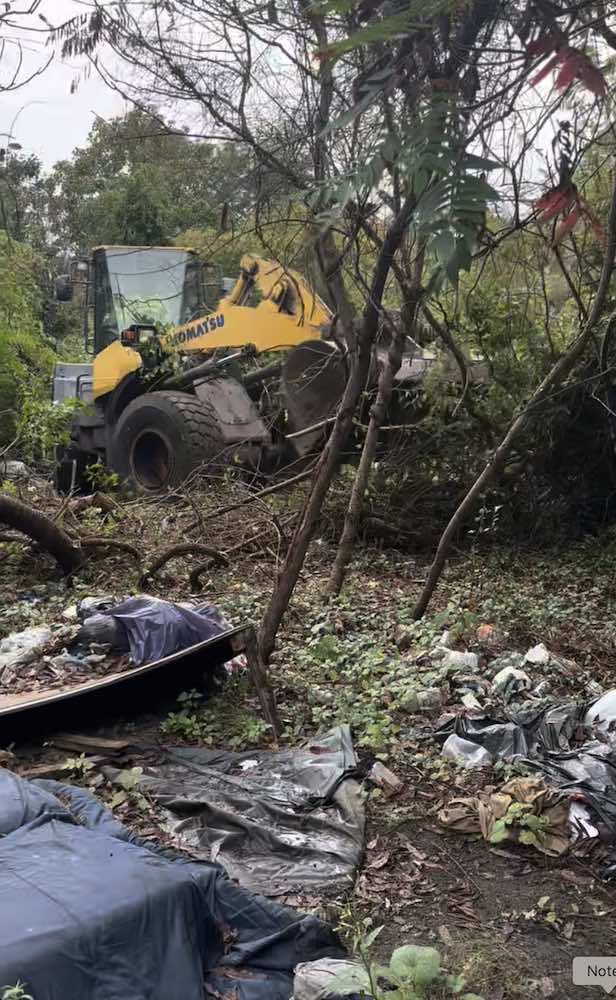
Mayor Paul Coogan said at one point, the Kennedy Park encampment was a “bomb site,” and one of the numerous sites the city has routinely cleared and cleaned up over the past few years.
He credits some of the homeless residents for aiding in the clean-up previously. At Thursday’s clean-up, Fontaine said 11 people signed up to help the city crews.
Relocation and recovery
Thursday’s activity was not about taking down the tents of those who remained at the encampment, but to clean up the mess, according to Mayor Paul Coogan.

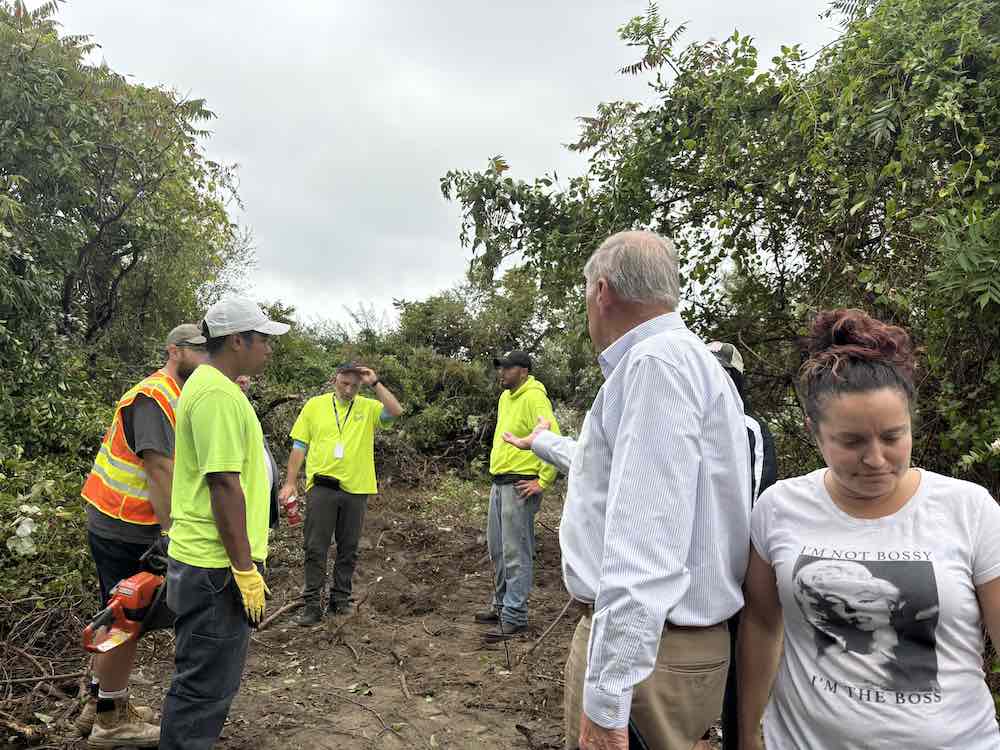
“Then we’ll come down with the F.A.S.T. team and try to coordinate with finding them treatment and housing. We got four out of here today, so that’s a tremendous success,” said Coogan. “Sometimes it takes a couple of times to get them when they’re ready to go.”


Earlier, Bostock found a woman, who does not suffer from drug abuse, deeper in the encampment, whom the team wasn’t aware of.
“My colleague is speaking with her right now to see if we can get her a place,” said Bostock.
He said sometimes it’s harder to find a place for people who are not suffering from addiction because of the lack of programs and beds.
Another man, Bostock had to coax from his tent as the backhoe got closer, tearing down trees to clear the pathway.
The F.A.S.T. team was able to find the woman a place to stay, and the gentleman who was hesitant to leave his tent agreed to go into detox. By noon, Bostock had loaded the two into an SUV to take them to their temporary housing.
Two other people were placed in temporary housing. Fontaine said they’d be working on getting the remaining homeless residents of the camp a place.
One of the remaining folks is Nicholas Finch, who explained to Coogan that he lost his apartment in March after his grandfather, whom he helped care for, went into nursing care. Finch said he works full-time but can’t afford rent after he pays $1,100 in child support.
“It came down to the point that either I eat or pay rent,” said Finch.
Coogan said the clean-up at the Kennedy Park encampment is being funded by proceeds from the opioid lawsuit which the city was a plaintiff.


