Fall River Politicians Receive Office Stipends But Pay No Rent or Utilities In Violation of Ethics and Campaign Finance Rules

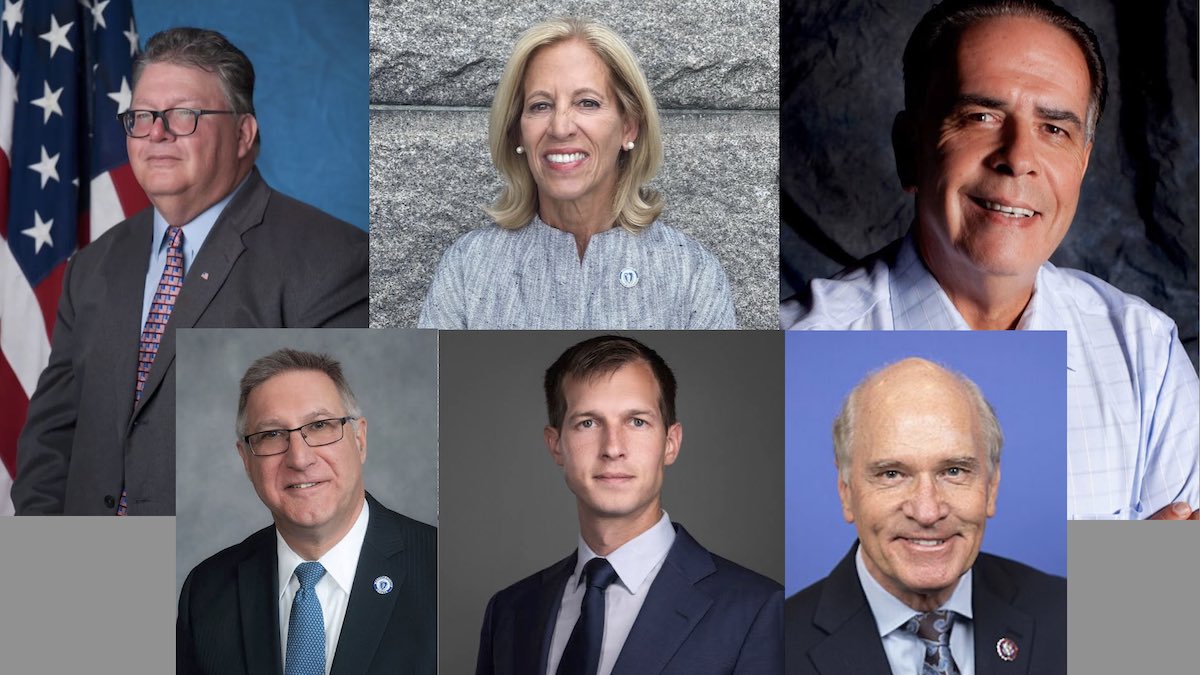
Even though they receive significant office stipends and in violation of ethics and campaign finance rules, Fall River State Representatives Alan Silvia, Steven Ouellette, State Senator Michael Rodriques and Congressmen Jake Auchincloss and Bill Keating do not pay rent or utility costs for their office space in the Fall River Government Center. State Rep. Carole Fiola doesn’t pay rent or utilities for her office at the Fall River Registry of Deeds.
According to Fall River City Administrator Anne O’Neil Souza, Massachusetts State Representatives Steven Ouellette and Alan Silvia share an office in Fall River Government Center, State Senator Rodrigues as his own office and Congressmen Auchincloss and Keating share an office. According to Souza, none of them pay rent or utility costs like electric or heat.
Three entities do pay rent in City Hall. According to Chief Financial Officer Emily Arpke, the Fall River Redevelopment Authority, Fall River Community Development Agency, and Bristol County Training Consortium (BCTA)/Workforce Investment Board (WIB) pay rent to the City of Fall River.
Ethics Violation
Per Mass.gov, “public employees may not accept gifts and gratuities valued at $50 or more given to influence their official actions or because of their official position.“ Office space in the Fall River Government Center is worth far more than $50, and likely in the hundreds or thousands of dollars since utilities and possible other perks are included. It’s clear these elected officials are receiving office space because of their official position, against ethic rules.
Campaign Finance Violations
According to the Massachusetts Office of Campaign and Political Finance (OCPF), an in-kind contribution is any non-monetary donation of goods, services, equipment, or facilities given to a candidate or political committee for free or at less than fair market value. Candidates and political committees are strictly prohibited from receiving any in-kind contributions from corporations, LLCs, LLPs, or partnerships.
The City of Fall River is a municipal corporation and a body corporate and politic under Massachusetts state law. According to the city’s Home Rule Charter, the inhabitants of the city—within the territorial limits established by law—constitute this legal corporate entity to manage its fiscal, prudential, and municipal affairs.
Per the OCPF rules on Lease of Real or Personal Property By Candidates or Poltical Committees, if a candidate pays less than fair market rent, an unkind contribution must be attributed to the organization leasing the office space to the candidate. To avoid reporting it to OCPF, they must reimburse it.
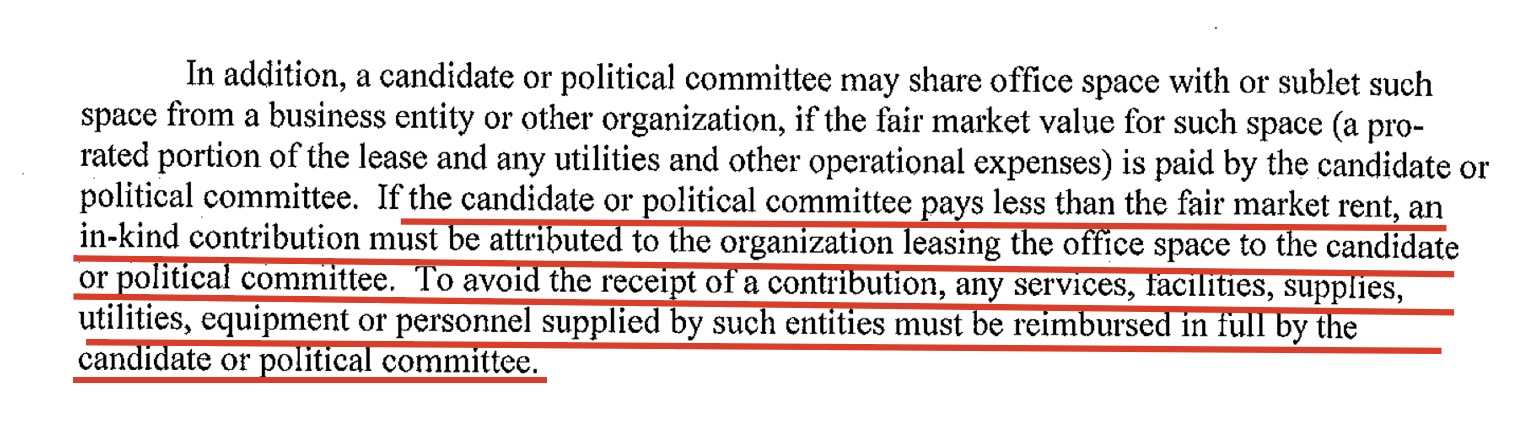

The $1,000 doesn’t apply because Fall River is a corporation, which means elected officials aren’t even allowed to take $1 in in-kind donations. Regardless, Fall River Reporter could not find any rent or utility in-kind contributions listed on State Representatives Alan Silvia, Steven Ouellette, Carole Fiola, or State Senator Michael Rodriques campaign finance reports in OCPF.
Pocketing the $29,907 annual office space stipend while enjoying free rent

According to the official Mass.gov website, Massachusetts state representatives and senators earn an annual office and travel stipend. Representatives/senators who live within 50 miles of the State House receive $22,430 annually and those who live further than 50 miles away receive $29,907 annually. Fall River is more than 50 miles from the State House. Congressmen get much more money and maintain several offices throughout their district.
Free rent and utilities in a municipal government building means elected officials are taking from the taxpayers twice. The elected official receives nearly $30,000 from state taxes, which he or she is pocketing, and the municipality is not collecting rent/utility revenue which could be used to offset taxes.
Free rent and utilities allows incumbents to build up campaign cash
If an elected official is receiving $29,907 while having a rent free office, this allows him or her to save campaign funds which can then be used for election – an advantage non-incumbents don’t get. For example, if an elected official is saving $2,000 a month, that’s $24,000 a year or $240,000 over 10 years.
As of April 2026, OCPF reports show State Senator Michael Rodriques with over $1 million, Alan Silvia with $16,890, Steven Ouellette $6,184 and Congressman Jake Auchincloss has a whopping $7 million and Congressman Bill Keaton had $302,696.
State Rep. Alan Silvia recently moved out of the office he was paying rent and utilities with campaign funds into Fall River Government Center where he now pays no rent or gas and electric utilities.
You can see Silvia paid $2,700 for six months of rent in January of 2025 which means he was spending $5,400 annually (cheap by all measures).
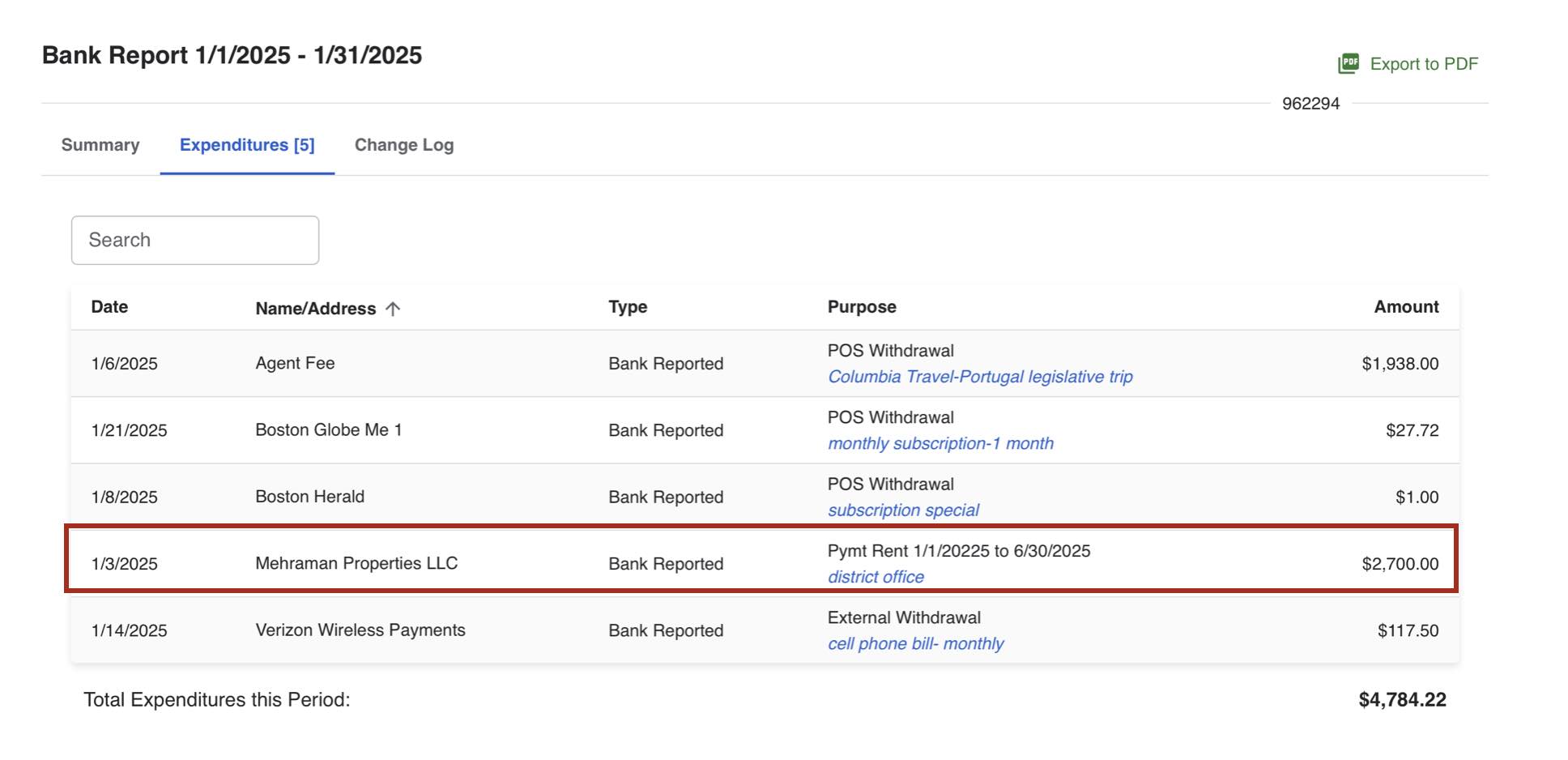
Silvia paid gas, electric, maintenance cost and cable that totaled over $1,000 in one month.
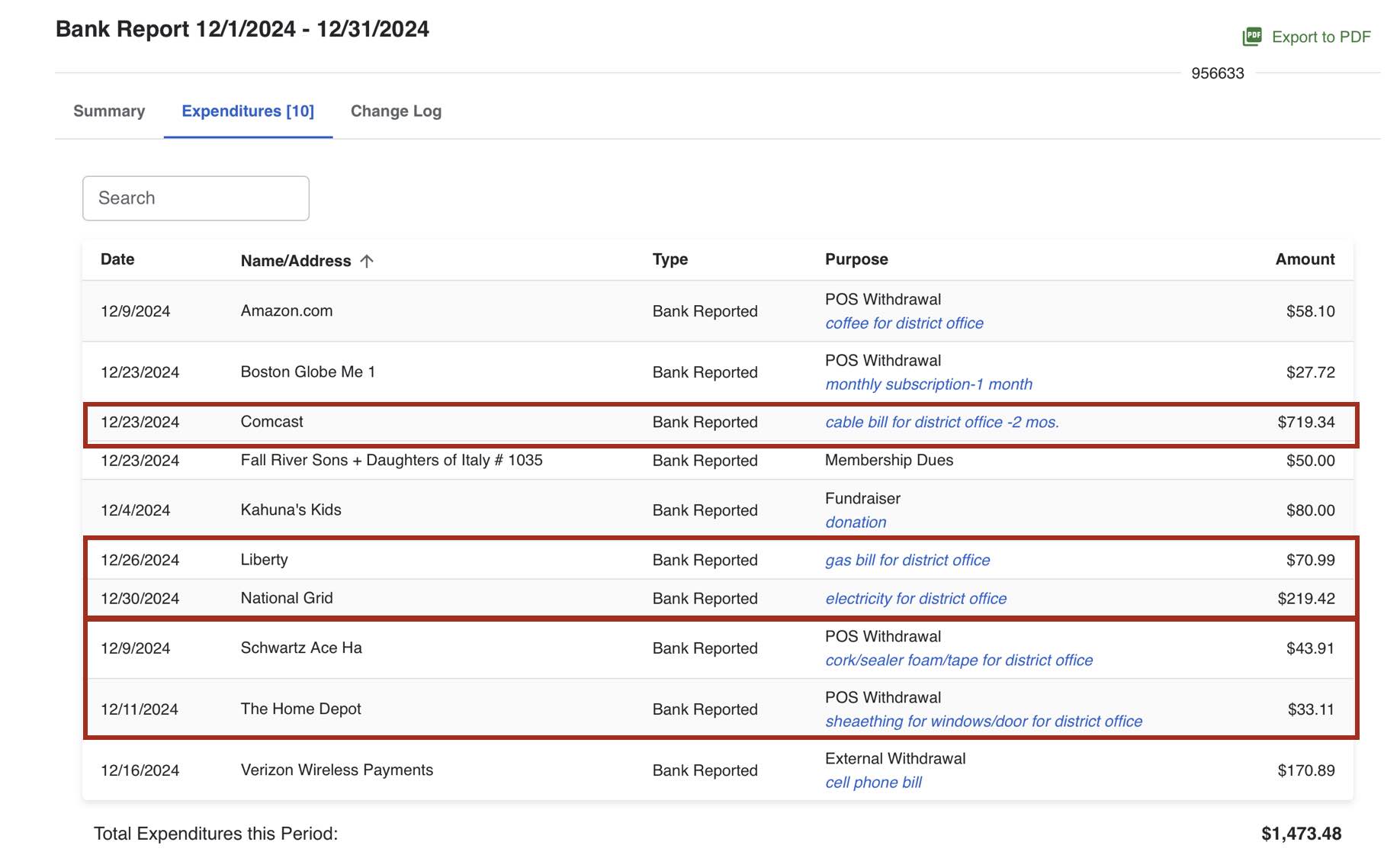
Fall River taxpayers are losing out
It’s currently budget season in Fall River, which means department heads are tightening budgets and City Councilors are trying to find additional cuts or revenue streams while state and federal elected officials pay no rent or basic utilities in Fall River Government Center. Elected officials getting free rent while receiving a significant stipend is not only goes against state ethics and campaign finance rules, it’s a bad look to the taxpayers who have seen their rents double and utility costs triple over the past 6 years.