
For many Americans, buying a first home is no longer about finding the perfect neighborhood and more about affordable housing.
Higher home prices, elevated borrowing costs and limited housing supply have pushed the traditional starter home further out of reach, leaving would-be buyers to make choices that previous generations may not have faced quite so sharply: a smaller house, a longer commute, a less fashionable ZIP code or a move to somewhere entirely different.
To find out where first-time buyers would most like to put down roots, PortlandRealEstate.com polled 3,034 prospective first-time buyers, asking them to identify the location they most envy as a place to buy their first home.
The top 3 most envied locations among Massachusetts first-time buyers are:
#1. Fall River
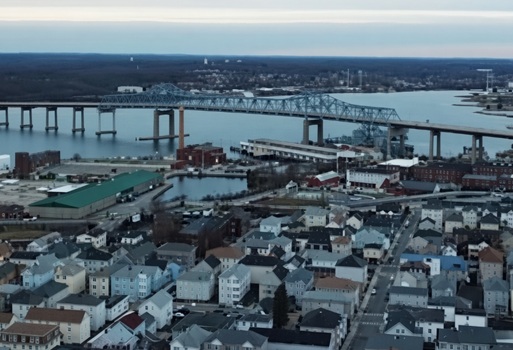
Waterfront character, a substantial stock of older homes and access to employment across southeastern Massachusetts make Fall River an appealing option for budget-conscious buyers. The city sits within reach of Providence, New Bedford and the wider South Coast, while housing can remain less expensive than in many communities closer to Boston. Neighborhood conditions vary, and first-time buyers may need to consider renovation costs or a longer commute to larger job centers. For those prepared to choose carefully, Fall River offers urban scale and regional access without the highest Massachusetts prices.
#2. Fitchburg
For first-time buyers priced out of Greater Boston, Fitchburg offers a comparatively attainable route into the Massachusetts housing market. Its historic neighborhoods, commuter rail connection and proximity to regional employers give the city practical appeal beyond its lower prices. Buyers may need to accept an older property, a lengthy trip into Boston or fewer amenities than they would find closer to the city. Even so, Fitchburg provides space and connectivity at a cost that remains more manageable than much of eastern Massachusetts.
#3. Worcester
Continued investment, a growing healthcare and education economy and direct rail links to Boston have strengthened Worcester’s appeal among first-time buyers. The city offers the amenities of a major urban center while historically remaining more accessible than communities inside the Boston metro. Rising demand is narrowing that affordability advantage, however, and buyers may need to settle for a smaller home, an older property or a neighborhood farther from the center. Worcester remains coveted because it combines employment opportunity, long-term potential and city living at a price that can still undercut Greater Boston.
Affordability Matters
When respondents were asked for the single biggest factor that would make a ZIP code appealing for their first home, price came first, at 30%.
The remaining priorities were:
- 15% – Being close to family and friends
- 10% – Good schools
- 9% – Attractive homes or neighborhood character
- 9% – A short commute or access to jobs
- 7% – Walkability
- 7% – Restaurants, shops, and entertainment
- 7% – Potential for property values to rise
- 6% – Parks and outdoor spaces
The findings suggest that the first-home calculation is dominated by two fairly basic questions: Can I afford to live here, and will I feel comfortable living here?
Traditional markers of a “desirable” neighborhood. Restaurants, walkability, good schools, and attractive streets still matter.
Buyers Are Prepared to Give Up Space
Getting onto the market also appears to require some prioritizing. Asked what they would sacrifice to make their first home affordable, 17% said property size, making square footage the most expendable feature on the list.
Lifestyle amenities were not far behind. 12% would give up easy access to restaurants and entertainment, while another 12% would accept a longer commute. Other compromises included:
- 12% – Living farther from family and friends
- 10% – Having fewer bedrooms
- 9% – Giving up walkability
- 8% – Having less yard or outdoor space
- 8% – Compromising on the quality of local schools
- 7% – Buying in a less desirable neighborhood
- 7% – Accepting a property in worse condition
In other words, the dream has not disappeared, but it is getting smaller, sometimes quite literally.
For many buyers, the first home is increasingly viewed as exactly that: a first home, rather than the property expected to tick every box for the next 20 years.
Smaller Towns Are Winning the Reality Check
Perhaps the clearest sign of how the market has changed came when prospective buyers were asked what kind of location they would realistically consider.
The most popular response was not an urban neighborhood or a traditional suburb. Instead, 27% said they would consider buying in a smaller town or rural area.
Another 23% would choose a smaller property if it meant securing a home in a desirable neighborhood, while 19% would move to a suburb farther from the city.
Other options attracted smaller shares:
- 10% would buy a fixer-upper in a better location.
- 9% would choose a condo or apartment instead of a house.
- 6% would buy in an up-and-coming neighborhood.
- 6% would accept a larger property in a less desirable neighborhood.
“Buying a first home is still one of the most important financial milestones people can reach, and what these results show is that buyers are becoming much more open-minded about where that first step might happen,” says a spokesperson from PortlandRealEstate.com.
“There are fantastic places to buy across the country that may not always be the obvious names. For first-time buyers, the key is not necessarily finding a home that ticks every box on day one. It is finding somewhere that works for your budget, gives you a lifestyle you can enjoy and allows you to start building equity. A first home is a starting point, and getting onto the market can open up far more choices in the years ahead.”