

latest
$115 million sought to care for Massachusetts homeless squeezed out by state’s high costs, housing shortages

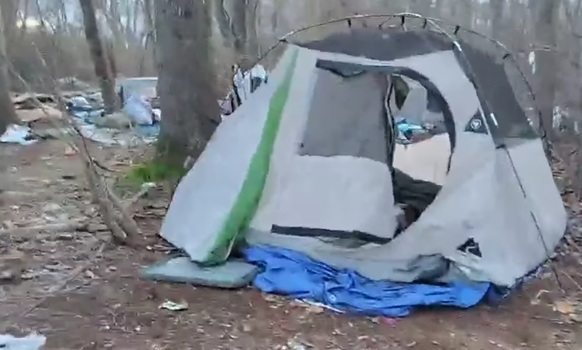
STATE HOUSE, BOSTON, Feb. 3, 2026…..Strained by a growing number of individuals with complex needs staying in shelters, providers are urging lawmakers to boost funding beyond Gov. Maura Healey’s fiscal 2027 budget proposal to help address people squeezed out by the state’s high costs and housing shortages.
A top House Democrat signaled more support is coming during a briefing Tuesday organized by the Coalition for Homeless Individuals, which represents more than 60 community-based providers across Massachusetts.
According to the coalition, 85% of individuals in Massachusetts experiencing homelessness are sheltered, 90% are homeless for a few days to a year, and 10% are chronically homeless.
Individuals without children do not have the same emergency housing protections as families do under the state’s Right to Shelter Law, said Michael Libby, executive director of the Somerville Housing Coalition. Funding streams are also different for individual homelessness supports and the emergency assistance family shelter system, which previously saw exploding costs amid a surge of migrant arrivals.
“The number of folks living outside in our neighborhoods has increased. The visibility of those people outside in our community has grown exponentially,” Libby said. “Our population is getting older and struggling with complex medical issues.”
The individual shelter system is operating under “extraordinary pressures,” said Jane Banks, vice president of housing and homeless services for Clinical & Support Options in western Massachusetts.
“We’re serving increasing numbers of older adults with higher levels of care need, more youth with significant mental health, individuals with greater acuity and complexity, all without corresponding increases in staffing or funding,” Banks said. “Central Massachusetts and western Massachusetts are experiencing growing homelessness, driven by limited workforce and wage opportunities, rising health care costs, severe housing shortage and rapidly escalating rents, restrictions on camping in rural areas, which are pushing individuals into already burdened urban centers.”
The coalition is seeking $115 million for a budget line item for individual homeless provider programs. Healey proposed funding the account at about $114 million in the fiscal 2027 budget she released last week.
“This line item is incredibly important because of the language that’s attached to it — it is extremely flexible,” said Kate Chang, vice president of government relations at Pine Street Inn. “It allows us to support individuals across the commonwealth who have more and more complex needs, as well as to do everything from job training for our people coming in, to hook them up with services, to permanent supportive housing.”
The coalition also wants $10 million for a workforce development line item, aimed at recruiting and retaining shelter provider staff. That would represent level-funding over fiscal 2026.

Healey has proposed no funding for the account, with her budget saying the administration has “[e]liminated FY26 one-time costs.”
Chang, asked whether she expects the branches will again restore workforce dollars, said, “We’ve had very strong support for it in the past.”
“We’re hoping to continue to have strong support for it in the future,” she continued.
Rep. Richard Haggerty, co-chair of the Housing Committee, thanked shelter providers for “incredible work.”
“I’m here to let you know that you have a friend in the Legislature,” Haggerty said. “You have somebody not just in my office, but I know in the speaker’s office, chairman of Ways and Means, and my colleagues who are here today, that we’re going to continue to give you all the tools you need to hopefully make sure that people continue to have a roof over their head, have supportive housing, have the tools they need to rebuild their lives.”
The request for state dollars comes as shelter providers contend with federal funding uncertainty surrounding homelessness programs. Libby said providers are facing “potentially catastrophic effects from federal policy changes that are imminent.”
A December court ruling temporarily blocked the U.S. Department of Housing and Urban Development from making changes to its Continuum of Care grant program. Attorney General Andrea Campbell had joined a multistate lawsuit in November that argued HUD’s changes were illegal and would abruptly end support for people experiencing housing insecurity or homelessness. There are 11 Continuum of Care programs in Massachusetts that receive more than $136 million each year from HUD, Campbell’s office said.
Chang said she’s monitoring a pending HUD and transportation appropriations bill in Congress. The package would extend Continuum of Care grants that are slated to expire in the first quarter of 2026 by 12 months, according to the National Low Income Housing Coalition.
“Our hope is that we get an extension on CoC funding, that it’s level-funded, that we get our guarantees for the next 12 months. That will buy us time to negotiate the actual language for how CoC funding goes through, ” Chang said.
Alison Kuznitz is a reporter for State House News Service and State Affairs Pro Massachusetts. Reach her at akuznitz@stateaffairs.com.