
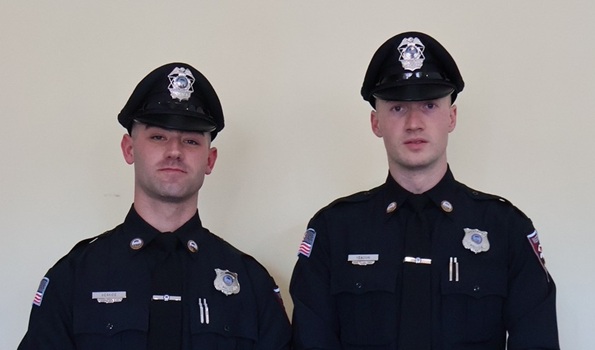
BRIDGEWATER – Today, the Municipal Police Training Committee Executive Director Colonel Rick Rathbun (Ret.) and Randolph Academy Director Jaclyn B. Kaulback announced the graduation of 47 police officers from the MPTC Randolph Police Academy’s 22nd Recruit Officer Class (ROC). The graduates successfully completed over 20 weeks of intensive, standardized training in all aspects of law enforcement and will now serve as full-time officers representing 18 police agencies across Massachusetts.
“Through our standardized curriculum and reform driven training, the MPTC is shaping a new generation of police officers prepared to meet the highest standards of public safety and accountability.” said MPTC Executive Director Colonel Rick Rathbun (Ret.). “This class represents a diverse group of individuals who have dedicated themselves to a demanding training process that prepares them for the realities of public safety work. We commend their perseverance and look forward to their contributions to departments statewide.”
In a graduation ceremony at Bridgewater State University earlier today, members of the 22nd ROC took an oath and received their badges for service. The new officers represented several police departments and agencies, including Attleboro, Beth Israel Deaconess Medical Center, Brockton, East Bridgewater, Eastham, Emerson, Fall River, Lynn, Natick, New Bedford, Plainville, Quincy, Randolph, Sharon, Stoughton, University of Massachusetts – Boston, Waltham and Westport. They join 200 officers who have graduated from MPTC-operated academies in training year 2025-2026.

The Recruit Officer Course provides over 800 hours of course curriculum designed to prepare student officers for the safe and effective performance of their duties. In keeping with mandates established by the landmark 2020 police reform law, the MPTC curriculum includes de-escalation training based on new use-of-force policies and regulations. Student officers also receive uniform training based on best practices related to essential modern-day policing needs, including effective communication skills, victim-centered and trauma-informed incident response, missing persons and human trafficking investigations, mental health-related emergency response, active shooter and hostile event response, patrol duties, and officer safety and wellness.
Upon successful completion of the Academy, student officers have met all training requirements to be eligible for Peace Officer Standards and Training Commission certification.