
A Plymouth County man has been granted parole with conditions after being convicted of killing two men.
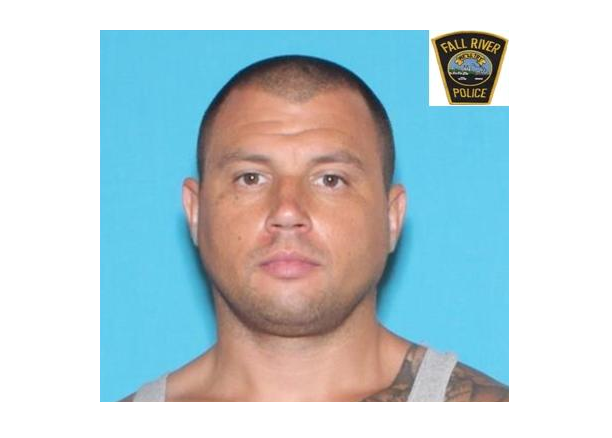
According to the Parole Board, “on December 13, 1991, 19-year-old Zakariya Ibrahim-Bush, formerly known as Kevin Bush, shot and killed 22-year-old Melvin Bonnet and 20-year-old Christopher Green at an apartment building in Brockton. Ibrahim-Bush resided in the building with his girlfriend and her children. Approximately three weeks before the murders, Ibrahim-Bush’s girlfriend told him she was afraid as she believed Bonnett had been pointing at the door to her apartment. Ibrahim-Bush assured her that no one would hurt her. On the evening of December 13, 1991, Ibrahim-Bush left his apartment and was heard moments later saying, “[N]o one’s getting my woman,” followed by a sound “like firecrackers.” Brockton police officers were dispatched to the building, where they found Bonnet and Green suffering from gunshot wounds. Ibrahim-Bush had been observed in possession of two firearms earlier that day.”
“The investigation, which included eyewitness testimony and ballistics information, determined that Ibrahim-Bush was responsible for the shooting. It was later discovered that Ibrahim- Bush had been residing in New York under the name “Kalvin Johnson.” He was later identified and arrested and then extradited back to Massachusetts to be charged for the murders.”
The Board State that “on August 29, 1994, after a jury trial in Plymouth Superior Court, Ibrahim-Bush was found guilty of two counts of murder in the first-degree and received two concurrent sentences of life in prison without the possibility of parole. On April 25, 1996, in Plymouth Superior Court, Ibrahim-Bush received a consecutive 1-to-2-year sentence for assault and battery on a correctional officer. On June 5, 1998, in Norfolk Superior Court, Ibrahim-Bush received a concurrent 4 to 4 years and 1 day sentence to be served from and after the murder sentence for assault by means of a dangerous weapon and assault and battery on a correctional officer. On that same date, he received another concurrent 2 to 3 years sentence to be served from and after the murder sentence for malicious destruction of property.”
“Ibrahim-Bush became parole eligible following the Supreme Judicial Court’s decision in Commonwealth v. Mattis, 493 Mass. 216 (2024), where the court held that sentencing individuals who were ages 18 through 20 at the time of the offense (emerging adults) to life without the possibility of parole is unconstitutional. As a result of the SJC’s decision in regard to his first- degree murder conviction, Ibrahim-Zakariya was re-sentenced to life with the possibility of parole after 15 years.”
“This was Ibrahim-Bush’s first appearance before the Board. He is 52 years old and has been incarcerated for the past 31 years.”
The Board released the following decision in granting Ibrahim-Bush parole.
“Although Mr. Ibrahim-Bush’s behavior during his initial period of incarceration was troubling, his last disciplinary report involving violence occurred almost 20 years ago. Mr. Ibrahim-Bush was made parole eligible due to the Mattis decision; however, his participation in rehabilitative programming began well before this time. While incarcerated, Mr. Ibrahim-Bush has participated in many meaningful programs addressing his risk and need areas, including Restorative Justice and Alternatives to Violence. Mr. Ibrahim-Bush obtained his GED while incarcerated and is now enrolled at Boston College and plans to continue his education upon release. Mr. Ibrahim-Bush has a solid re-entry plan prepared by Shawn Galvin. The Board also considered the expert forensic evaluation prepared by Dr. Frank DiCataldo, who determined Mr. Ibrahim-Bush to be a low risk for recidivism. The Board considered testimony from members of the community both in support of, and in opposition to, parole. The Board concludes that Zakariya Ibrahim-Bush has demonstrated a level of rehabilitation that would make his release compatible with the welfare of society.”
Special conditions for Ibrahim-Bush’s prole include: “Waive work for 2 weeks; Electronic monitoring for 6 months; Supervise for drugs, testing in accordance with Agency policy; Supervise for liquor abstinence, testing in accordance with Agency policy; Report to assigned MA Parole Office on day of release; No contact with victim’s families; Must have mental health counseling for adjustment; Residential program Sober Home.”